
Recent Fashion Exhibitions in Paris
/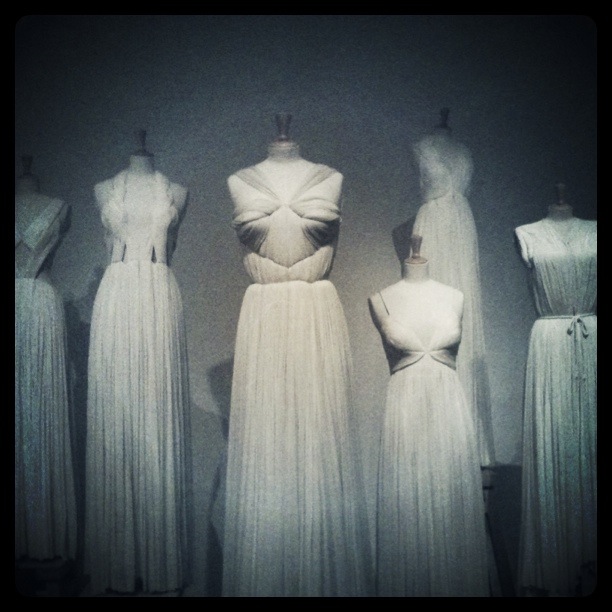
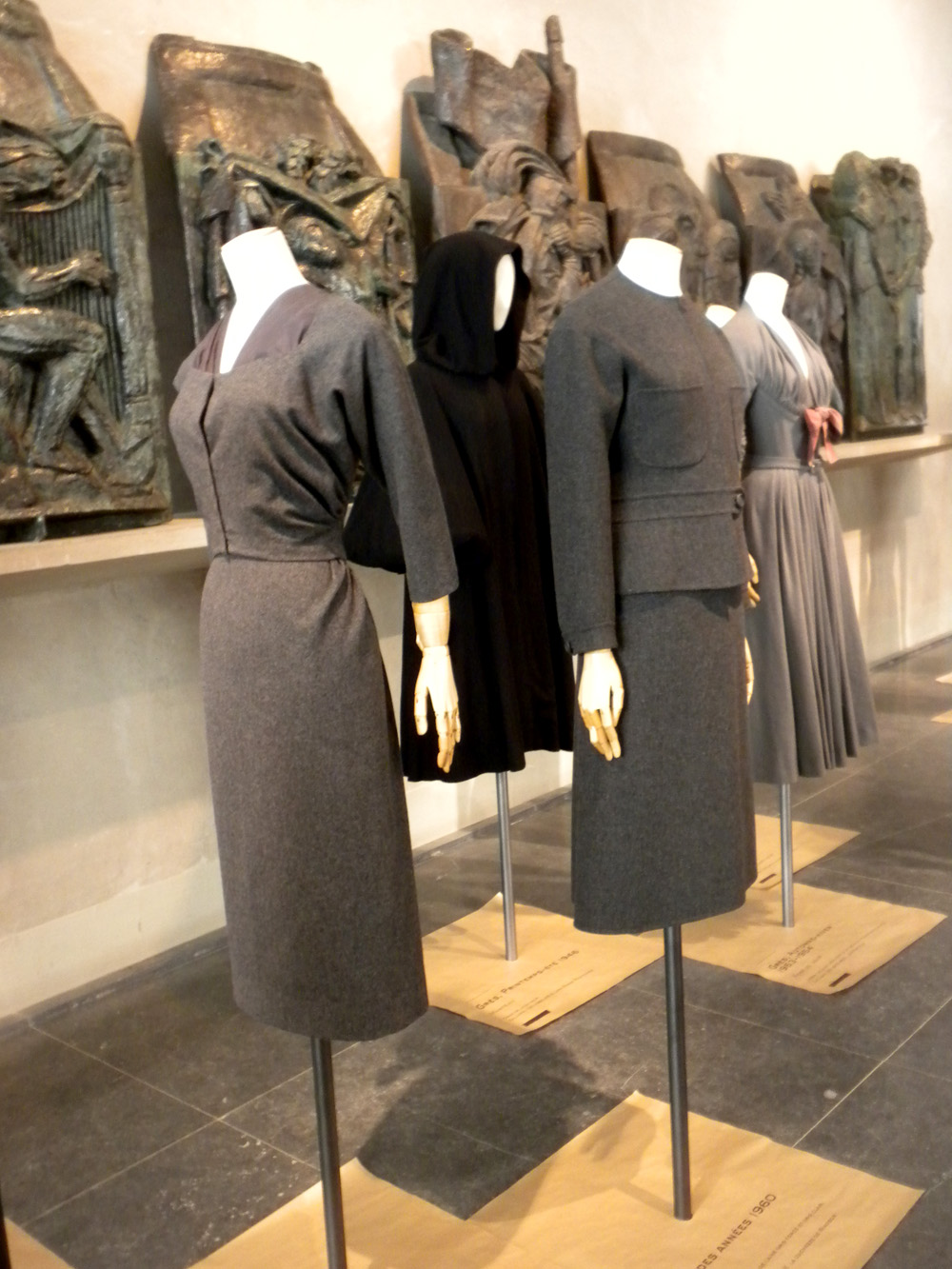
"Madame Grès, la couture à l'oeuvre,” at the Musée Bourdelle, photo by Laura McLaws Helms
by Laura McLaws Helms
While fashion is often viewed as a lesser art, used by museums to draw in a broader range of visitors, recent exhibitions in Paris have illustrated the vastly different ways costume can be looked at in regards to its place in society. Of them, the exhibition “Madame Grès, la couture à l'oeuvre,” at the Musée Bourdelle (till July 24th), covers the most traditional view of fashion history - a retrospective on a single couturier. Conversely, “L'Orient des femmes vu par Christian Lacroix” at the Musée du Quai Branly and “Les années 1990-2000” at the Musée de La Mode et du Textile in the Musée des Arts décoratifs are focused on aspects of dress history that are commonly overlooked, and when viewed together allow for a more varied understanding of costume.
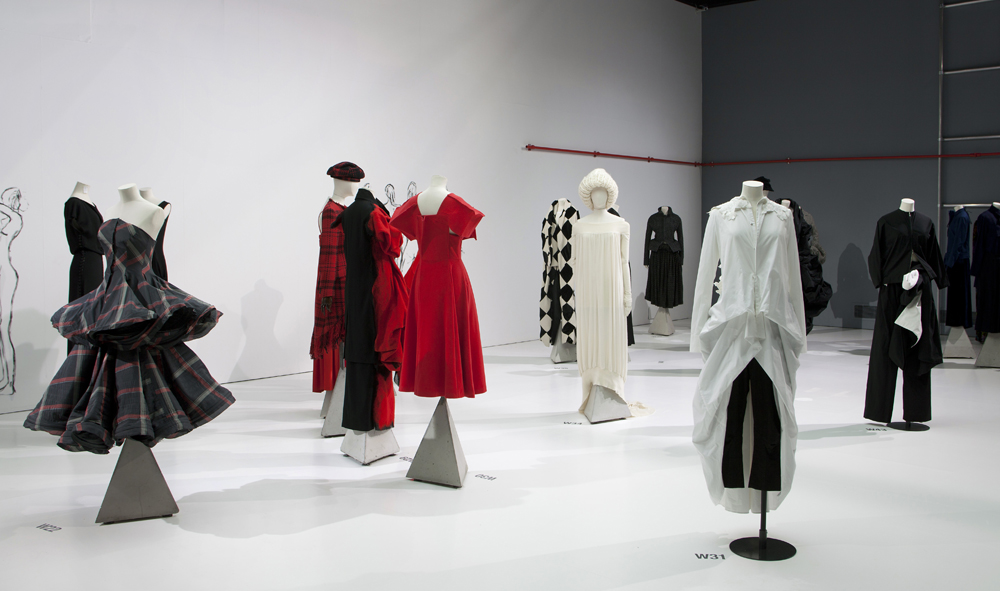
The ongoing renovations of the Musée Galliera have left Paris without a museum expressly devoted to fashion, but provided its curators with the opportunity to stage a fashion exhibition amongst the sculpture of the Musée Bourdelle, the first time a multi-disciplinary show has been done there. The high quality work of Grès’ dresses, many of which can be closely analyzed, is a remnant from a past world - a fact which is further emphasized when compared with "Les années 1990-2000" organized by Musée de La Mode et du Textile (which closed May 8th). The second half of their ‘Histoire idéale de la mode contemporaine,’ the designers and looks chosen were the very apotheosis of Grès’ inimitable classicism.
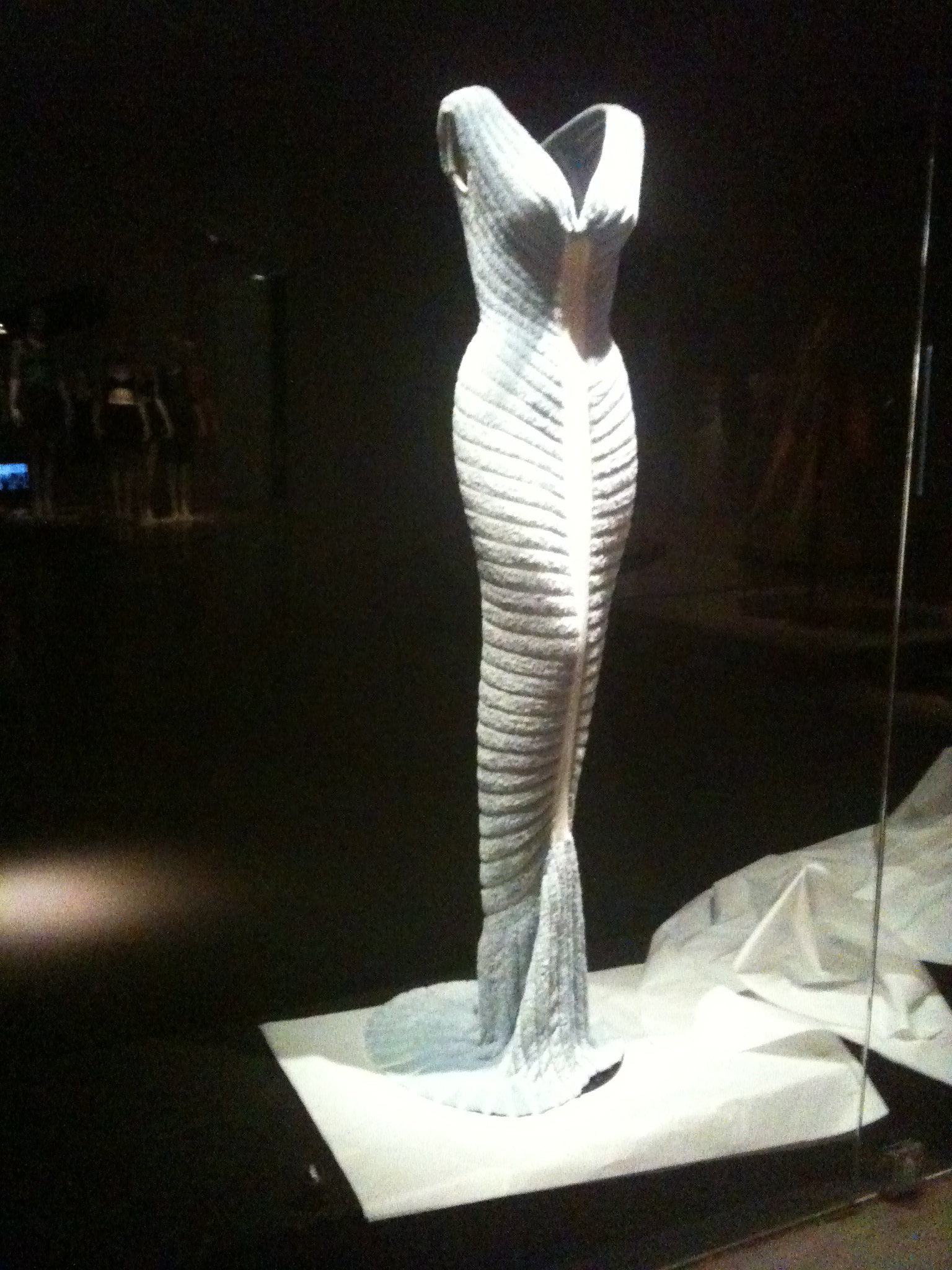
Azzedine Alaia exhibited in “Les années 1990-2000” at the Musée de La Mode et du Textile in the Musée des Arts décoratifs, photo by Laura McLaws Helms
Opening with Margiela and the Belgians, the two floors of the exhibition were a rabbit warren of glass boxes filled with mostly prêt-a-porter outfits that bare little in common with the stately chic of Grès. The work of the thirty designers on view revealed the unquestionable influence of street style on contemporary fashion, with disparate ideas from grunge, punk and goth all making appearances. The diverseness of the looks on view (Lacroix’s gaudy couture vs. Miyake’s architectural pleated forms) made for an enjoyable exhibition, though one that at times seems too have been organized too soon — Lanvin RTW cocktail dresses two years out of the stores appear more ridiculous than prescient in the context of a museum. It is always difficult to truly analyze trends as they occur from a historical point of view, and the constructed tableaux often drew directly from the runway videos, emphasizing the seemingly unbreakable bonds between the garments and their mediated visions.
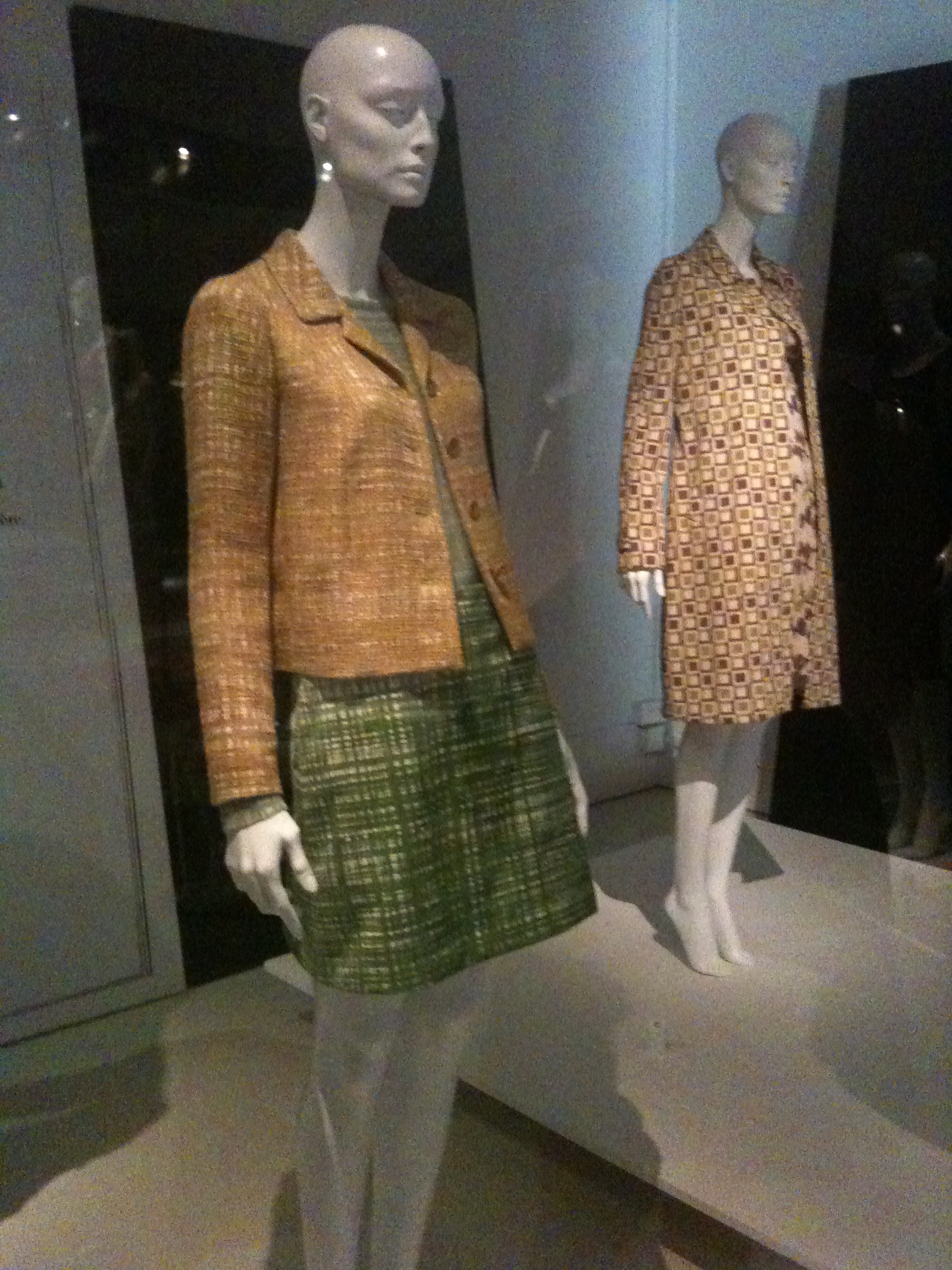
Prada exhibited in “Les années 1990-2000” at the Musée de La Mode et du Textile in the Musée des Arts décoratifs, photo by Laura McLaws Helms
In sharp contrast to the Parisian high fashion focus on those exhibitions (all of the designers at MAD primarily show there), “Women of the Orient” (February 8- May 15) was a woven and embroidered journey through the Middle East. Beginning with a map, this factual analysis of the traditional garments of Syria, Jordan, Palestine and the Sinai desert was concerned with form and the craftsmanship. Though curated by Hana Al Banna-Chidiac, an eminent scholar of Middle Eastern textiles, this exhibition was the idea of Christian Lacroix, who following the closure of his couture house has found himself able to indulge his other passions, including a fascination with ‘Oriental’ dress dating to childhood. The heavily embroidered garments, layered and topped with jangling beads and coins impacted his design work, and Lacroix saw these women as “both witnesses and actresses in a contemporary history, which they lived through with their rebellious elegance, their cuts, their shapes, their traditions, their motives, their embroidery.” Viewed as a celebration of disappearing art forms and cultures, this exhibition was peerless in drawing together truly exceptional examples of native cultural dress. At a time when France has banned the wearing of the burqa in public, a display case of intricately embellished versions is of cultural import. The problems with this show rest more on a lack of editing and a failure in the design — apparently faced with choosing between many fine pieces they went with all of them, placing one behind another on sloping platforms meant to represent the jagged topography of the region. Hung flat to draw attention to the lack of tailoring, it was often difficult to see the dimly lit robes in back.
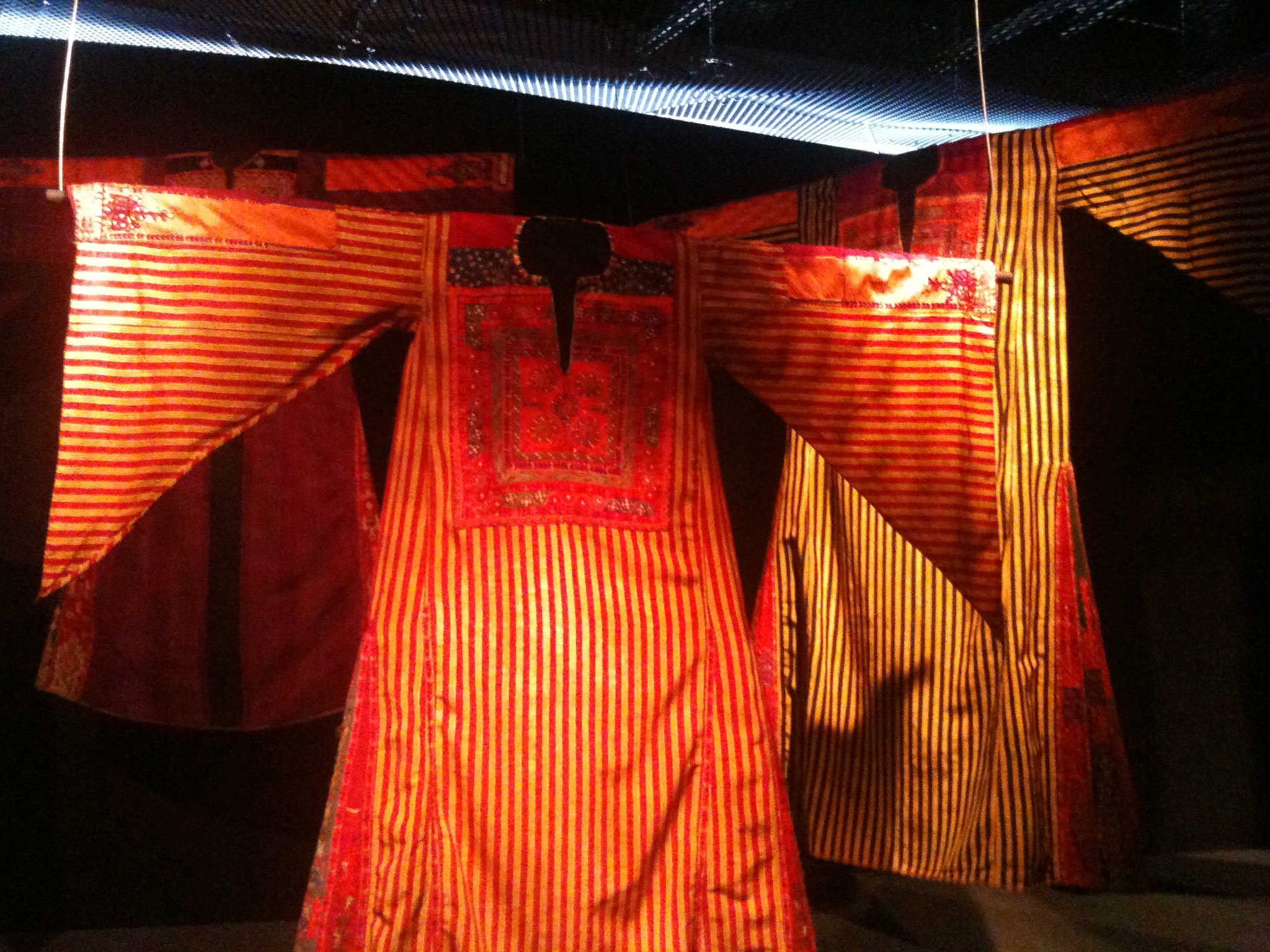 "L'Orient des femmes vu par Christian Lacroix” at the Musée du Quai Branly, photo by Laura McLaws Helms
While the garments in these exhibitions are examples of three different types of manufacture — haute couture, high end ready-to-wear and traditional handcrafts — they can be seen as symbolic of the constantly ebbing flows of fashion in France and the rest of the world. The handwork that is a requirement of haute couture and of traditional ethnic clothes has increasingly become unnecessary, replaced by many of the same manufacturing processes found in prêt-a-porter, yet the continued interest in these types of work, through exhibitions such as these, aids in their continuing relevance and influence.









Fashion Projects #5 is devoted to fashion curation, examining the meteoritic rise in relevance of fashion exhibitions.
It features interviews with an eclectic assortment of leading practitioners from different corners of the world. The issue includes long Q&As with Harold Koda, the longtime, recently retired curator of the Met’s Costume Institute, as well as the Museum at FIT’s veteran leader Valerie Steele. It also features interviews with curators in Antwerp (the ModeMuseum’s Kaat Debo), Toronto (Royal Ontario Museum’s Alexandra Palmer) and Venice (Maria Luisa Frisa); academics studying the field (Hazel Clark, Annamari Vänskä, and Alistair O’Neill); and, giving an on-the-ground perspective, the Met’s head conservator, Sarah Scaturro. The issue’s cover stars Greer Lankton’s sculptural representation of legendary Vogue editor and Costume Institute doyenne Diana Vreeland, who continues to loom over the field years after her death.
Table of Contents
Introduction
Showmanship and History: An Interview with Harold Koda by Francesca Granata
Woman of Steele: An Interview with Valerie Steele by Lisa Santandrea
Exploring Fashion’s Openness: An Interview with Kaat Debo by Alex Esculapio
London, After a Fashion Curator: An Interview with Alistair O’Neill by Alexis Romano
Curation and Conservation: An Interview with Sarah Scaturro by Mae Colburn
Reflections on Fashion Curating
An Interview with Hazel Clark and Annamari Vänskä
Fashion in the Vast Museum: An Interview with Alexandra Palmer by Ingrid Mida
Restless Curating: An Interview with Maria Luisa Frisa by Marco Pecorari