Nava Lubelski
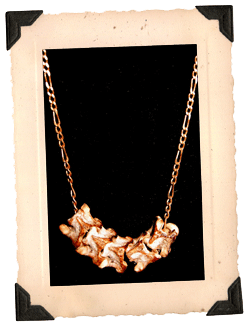
Side Dish, 2004
Hand-embroidered thread on ink stained cotton canvas.
Photo: Nava Lubelski (courtesy of www.madmuseum.org)
Fall always brings out interesting museum exhibitions, and this season especially. Over the past week I was able to view three incredibly different, yet intriguing shows. Here in NYC, the Museum of Art and Design just opened Pricked: Extreme Embroidery, which is the sister show to the crowd-pleasing Radical Lace and Subversive Knitting exhibition held earlier this year. Taught to embroider as a little girl, I found Pricked an energizing and fresh take on the "virtuous art" of needlework. Thematic sections reflect on embroidery's rich history and then move on to its ability to express politics, words, memory, and the body. Artists such as Angelo Filomeno, Elaine Reichek and Judy Chicago are represented, but it is often emerging artists that provoke the visitor most. Benji Whalen's surreal tattoo sleeves cheekily mimic the still slightly-taboo body art while Nava Lubelski subverts the idea of a stain as something imperfect by emphasizing its abstract and dynamic possibilities. Other favorites of the show included Paul Villinski and Paddy Hartley.
On a completely different note, I had the opportunity to visit a few museums while I was in Washington, DC over the weekend. One exhibition that stood out for its pure beauty was the Textile Museum's show on the Textiles of Klimt's Vienna. This show contained an original Klimt, along with many examples of some the most talented artists in the first part of the 20th century. Represented in force were several Wiener Werkstätte artists like Josef Hoffman, Dagobert Peche and Maria Likarz-Strauss. Interestingly, a textile called Bavaria by Karl Otto Czeschka shown in this exhibition is also included right now in the Multiple Choice: from Sample to Product show at Cooper-Hewitt, National Design Museum in NYC.
A third thought-provoking experience was found at the National Museum of the American Indian. Identity by Design: Tradition, Change and Celebration in Native Women's Dresses elegantly illustrates the transition of Native women's garments in the Great Basin area, starting with the influx of new materials into the region during the early 19th century. Through garments and illustrations, the exhibition explains the difference in construction techniques, such as 1-, 2-, and 3-hide dresses, as well as the symbolic and economic importance of specific materials and motifs. Most touching were the Ghost Dance dresses tucked away into a silent and shadowy corner. These garments are rarely seen due to their sparse survival and intensely sacred meanings, and, as the text panels indicate, they should only be viewed with the utmost respect.
It's wonderful that we live in a time when museums are including fashion and textiles as serious arenas of exploration for the public. Each of these exhibitions offers a transporting experience to the visitor, whether it is subversive, aesthetic, or historical.
Sarah Scaturro




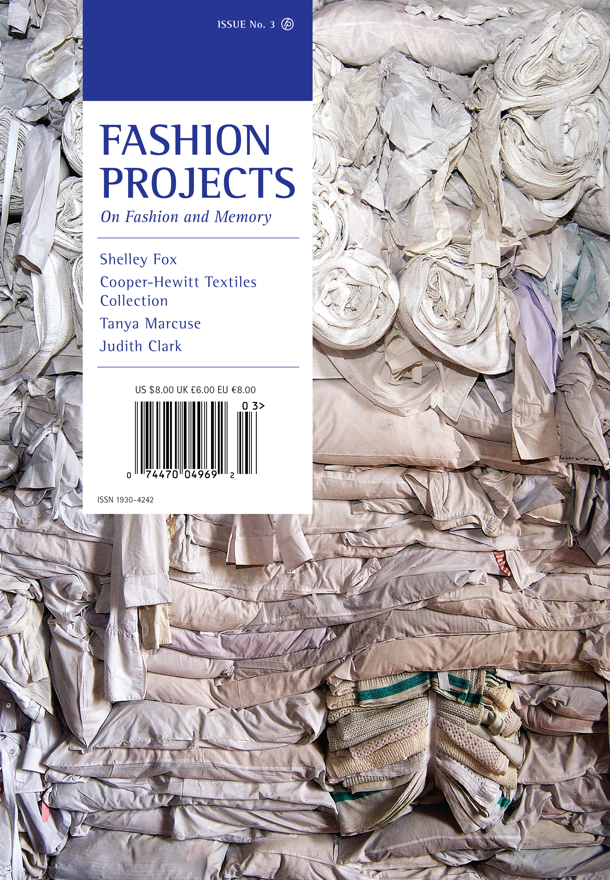


Fashion Projects #5 is devoted to fashion curation, examining the meteoritic rise in relevance of fashion exhibitions.
It features interviews with an eclectic assortment of leading practitioners from different corners of the world. The issue includes long Q&As with Harold Koda, the longtime, recently retired curator of the Met’s Costume Institute, as well as the Museum at FIT’s veteran leader Valerie Steele. It also features interviews with curators in Antwerp (the ModeMuseum’s Kaat Debo), Toronto (Royal Ontario Museum’s Alexandra Palmer) and Venice (Maria Luisa Frisa); academics studying the field (Hazel Clark, Annamari Vänskä, and Alistair O’Neill); and, giving an on-the-ground perspective, the Met’s head conservator, Sarah Scaturro. The issue’s cover stars Greer Lankton’s sculptural representation of legendary Vogue editor and Costume Institute doyenne Diana Vreeland, who continues to loom over the field years after her death.
Table of Contents
Introduction
Showmanship and History: An Interview with Harold Koda by Francesca Granata
Woman of Steele: An Interview with Valerie Steele by Lisa Santandrea
Exploring Fashion’s Openness: An Interview with Kaat Debo by Alex Esculapio
London, After a Fashion Curator: An Interview with Alistair O’Neill by Alexis Romano
Curation and Conservation: An Interview with Sarah Scaturro by Mae Colburn
Reflections on Fashion Curating
An Interview with Hazel Clark and Annamari Vänskä
Fashion in the Vast Museum: An Interview with Alexandra Palmer by Ingrid Mida
Restless Curating: An Interview with Maria Luisa Frisa by Marco Pecorari