

Murakami, "Mr.Pointy." Photo by Julien Jourdes for The New York Times
The Murakami exhibition which is currently on view at the Brooklyn Museum, where it traveled from the Los Angeles Museum of Contemporary Art, has been extensively discussed, particularly in relation to the inclusion of a mini-Vuitton boutique carrying the Murakami-Vuitton products in the midst of the exhibition. The debate raised by the store inclusion is a testament to the still-fraught relation between fashion, art and commerce—or rather the fraught relation between art and commerce, which seems to come in sharper focus when said art is aligned with fashion—the quintessential commodity. (The relation between art and fashion ultimately seems to highlight the status of art as commodity—one which, at least within the confines of the art museum, still seems to make people uncomfortable. In this particular case, it suggests a continuum between museum-goers and consumers, or perhaps the notion of museum-goers as consumers of culture and luxury goods alike.)
However, what I found most interesting about the presence of the Vuitton “boutique” in the Brooklyn museum is not so much how it re-activated these debates, but rather how it framed the store and the activities within it as performative. It highlighted the ritualistic nature involved in the consumption of goods (particularly luxury goods) which often goes undetected. In the process, it made these generally seamless actions strange and slightly unsettling.

Vuitton Store at the Brooklyn Museum. Photo by Julien Jourdes for The New York Times
Witnessing a couple purchasing a Vuitton-Murakami bag from the store clerks dressed in pristine white shirts, the viewer was made acutely aware of the awkwardness of the exchange—the forced niceness of the sales clerk and the equally forced (at least in this context) nonchalance of the luxury shopper. This exchange became even more awkward as the museum-goers, following the unwritten rules applying to exhibition-viewing, stared intently at the space and the activities taking place within it, trying to decipher its meaning…
Francesca
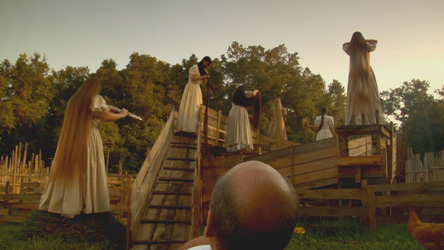
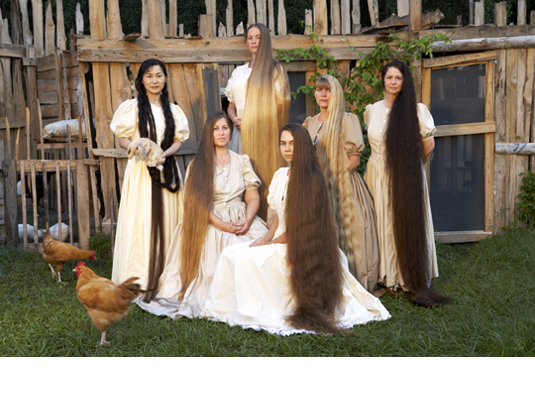
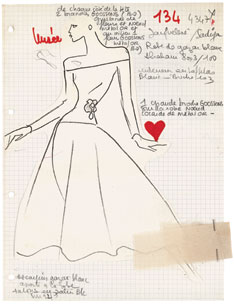


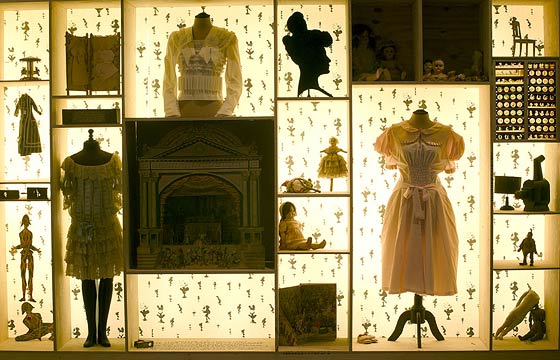

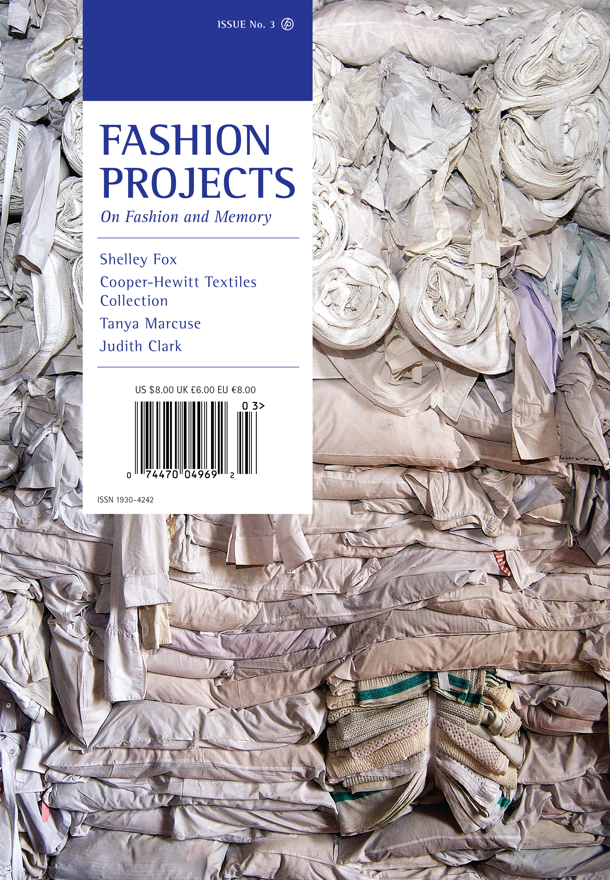


Fashion Projects #5 is devoted to fashion curation, examining the meteoritic rise in relevance of fashion exhibitions.
It features interviews with an eclectic assortment of leading practitioners from different corners of the world. The issue includes long Q&As with Harold Koda, the longtime, recently retired curator of the Met’s Costume Institute, as well as the Museum at FIT’s veteran leader Valerie Steele. It also features interviews with curators in Antwerp (the ModeMuseum’s Kaat Debo), Toronto (Royal Ontario Museum’s Alexandra Palmer) and Venice (Maria Luisa Frisa); academics studying the field (Hazel Clark, Annamari Vänskä, and Alistair O’Neill); and, giving an on-the-ground perspective, the Met’s head conservator, Sarah Scaturro. The issue’s cover stars Greer Lankton’s sculptural representation of legendary Vogue editor and Costume Institute doyenne Diana Vreeland, who continues to loom over the field years after her death.
Table of Contents
Introduction
Showmanship and History: An Interview with Harold Koda by Francesca Granata
Woman of Steele: An Interview with Valerie Steele by Lisa Santandrea
Exploring Fashion’s Openness: An Interview with Kaat Debo by Alex Esculapio
London, After a Fashion Curator: An Interview with Alistair O’Neill by Alexis Romano
Curation and Conservation: An Interview with Sarah Scaturro by Mae Colburn
Reflections on Fashion Curating
An Interview with Hazel Clark and Annamari Vänskä
Fashion in the Vast Museum: An Interview with Alexandra Palmer by Ingrid Mida
Restless Curating: An Interview with Maria Luisa Frisa by Marco Pecorari