
Rodarte: States of Matter
/by Ingrid Mida

All photos by Autumn de Wilde
Suspended like birds caught in mid-flight, the breath-taking creations of the Kate and Laura Mulleavy of the Rodarte label are presented as sculptures in an exhibition that opened on March 4 at the Museum of Contemporary Art in Los Angeles. On display in "Rodarte: States of Matter" are twenty pieces selected from the designers "White Collection" (Fall 2010), "Black Collection" (Spring 2010), "Red Collection" (2008) as well as the Odile/Black Swan tutus worn in the movie "The Black Swan". The title of the exhibition refers to the presentation of "inanimate objects in a state of flux, or animation, signifying the temporary states that material can assume."
Unconventional materials and processes are the hallmarks of the Rodarte label. The Mulleavy sisters subject fabrics, gauze, cotton cheesecloth, wool, rope, leather,and other materials to alchemic manipulations such as burning, stretching, weaving, dying, and stretching. They then layer materials, colours and textures into wearable works of art. With no formal training in fashion design, the two sisters started the Rodarte label in 2005 and in a short time have achieved great acclaim for their work which presents a mix of hard/soft and ugly/beautiful elements. Taking inspiration from the world around them, previous collections have been inspired by concepts such as horror films, architectural elements and California condors. In 2010, an exhibition of their work was presented at the Cooper-Hewitt Museum in New York confirming their place as designers who create art that becomes fashion.

This exhibition at the MOCA Pacific Design Centre in West Hollywood was designed by runway producer Alexandre de Betak, who is also a long-time collaborator of the Mulleavys. Initially the presentation seems quite straightforward as the displays are grouped according to color with the black garments in the first level gallery and the white and red garments in the second level gallery. Suspended by wires from the ceiling, each garment is shaped by a poured resin mannequin form which is largely invisible to the viewer, creating the illusion of a body and enhancing the focus on the garments as singular sculptural objects. But it is the combination of static elements, moving elements and a light installation that make this an authentic contemporary art presentation.
Several of the tutus also spin gently giving the illusion of a ghost ballerina doing pirouhettes. Some of the gowns are suspended over layers of fluorescent tubes that change in colour and intensity in a looped light show that goes from soft and pretty to hard and flashy. This is particularly effective for the grouping of gowns from the Red Collection that includes the bloodied tutu from the final scene in the Black Swan and also seems to reference the Mulleavy sisters' fascination with horror films. Unfortunately the sequencing is so rapid and the cycle so short that it feels like there are only seconds of normal lighting conditions. While the play of light is consistent with a cutting edge contemporary art presentation, it is distracting for visitors that simply want to appreciate the inherent beauty of the garments. Plus it is almost impossible to ignore the loud fan and the clicking noises of the light show.
Such minor flaws are quickly forgotten when compared to the chance to see a Rodarte creation up close. Photos of their creations do not convey the magic of their work. It almost seemed as if the Rodarte gowns were made by fairy sprites as there are no visible seams or points of attachment. Ethereal in their beauty, they are truly works of art.





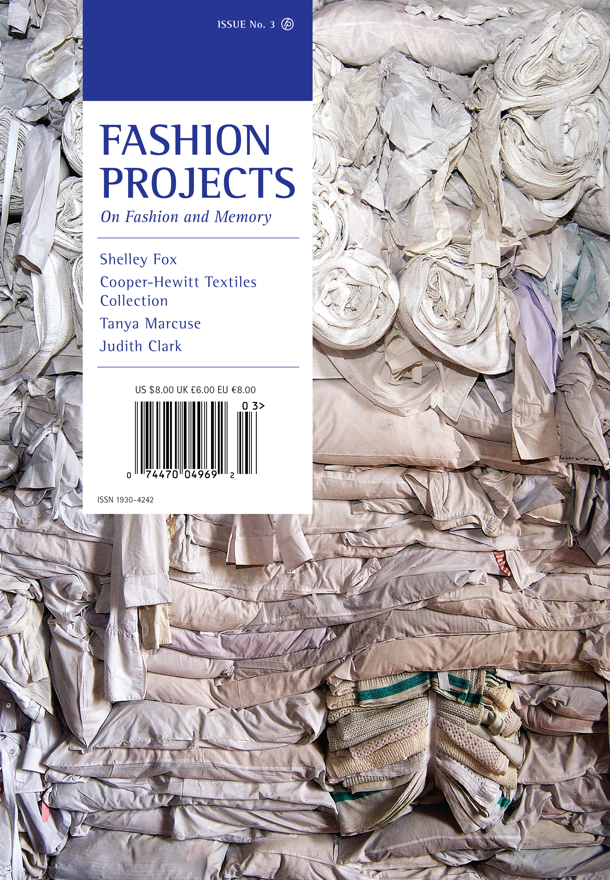


Fashion Projects #5 is devoted to fashion curation, examining the meteoritic rise in relevance of fashion exhibitions.
It features interviews with an eclectic assortment of leading practitioners from different corners of the world. The issue includes long Q&As with Harold Koda, the longtime, recently retired curator of the Met’s Costume Institute, as well as the Museum at FIT’s veteran leader Valerie Steele. It also features interviews with curators in Antwerp (the ModeMuseum’s Kaat Debo), Toronto (Royal Ontario Museum’s Alexandra Palmer) and Venice (Maria Luisa Frisa); academics studying the field (Hazel Clark, Annamari Vänskä, and Alistair O’Neill); and, giving an on-the-ground perspective, the Met’s head conservator, Sarah Scaturro. The issue’s cover stars Greer Lankton’s sculptural representation of legendary Vogue editor and Costume Institute doyenne Diana Vreeland, who continues to loom over the field years after her death.
Table of Contents
Introduction
Showmanship and History: An Interview with Harold Koda by Francesca Granata
Woman of Steele: An Interview with Valerie Steele by Lisa Santandrea
Exploring Fashion’s Openness: An Interview with Kaat Debo by Alex Esculapio
London, After a Fashion Curator: An Interview with Alistair O’Neill by Alexis Romano
Curation and Conservation: An Interview with Sarah Scaturro by Mae Colburn
Reflections on Fashion Curating
An Interview with Hazel Clark and Annamari Vänskä
Fashion in the Vast Museum: An Interview with Alexandra Palmer by Ingrid Mida
Restless Curating: An Interview with Maria Luisa Frisa by Marco Pecorari