By Rio Jade Ali
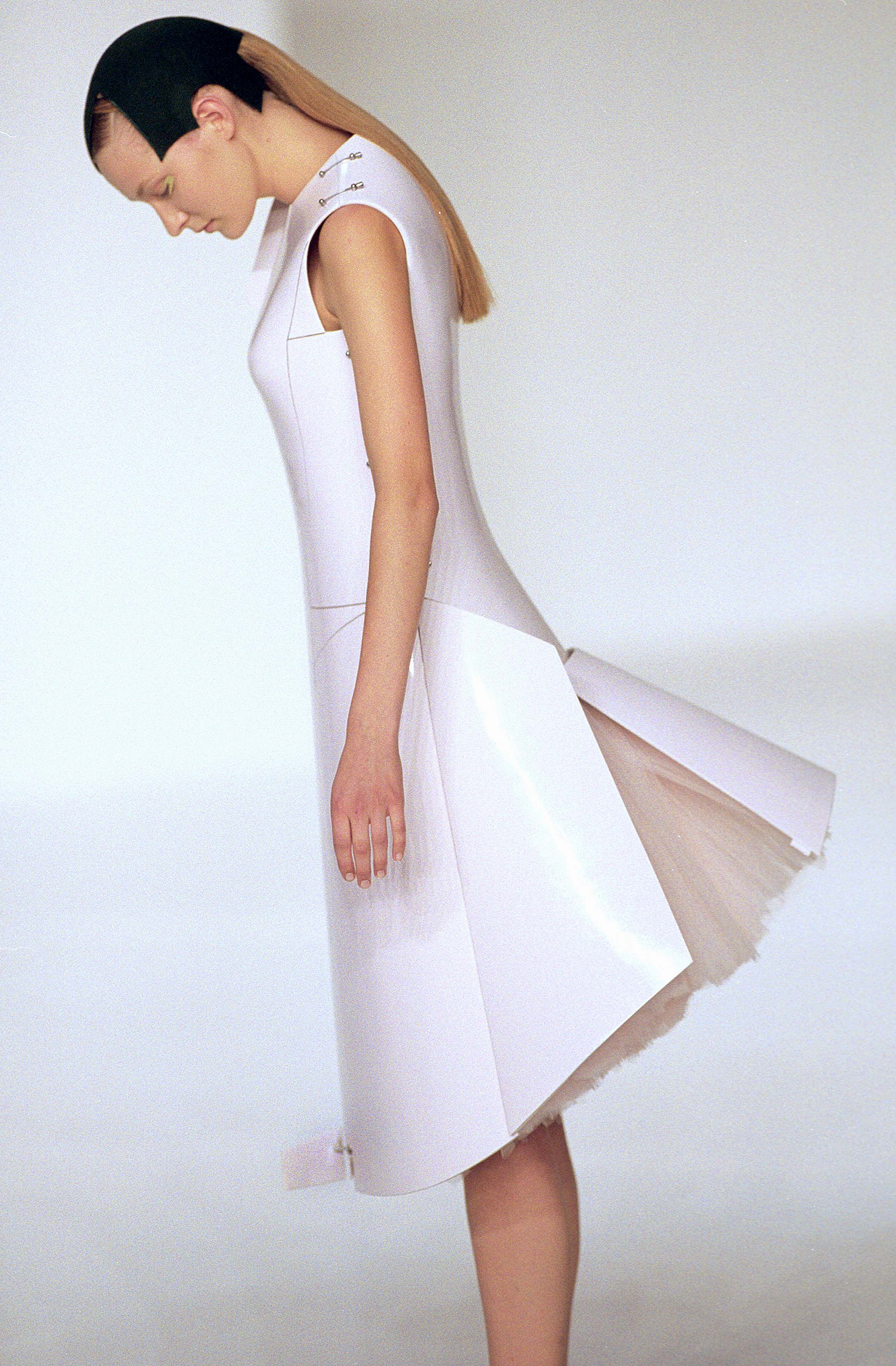 "Before Minus Now," Spring/Summer 2000
Anyone lucky enough to have caught Savage Beauty at the Metropolitan Museum of Art this year will tell you that fashion exhibitions have reached a whole new level of communication. The sheer magnitude of Alexander McQueen’s work was on full display, every inch a tribute to the designer’s unmistakable showmanship and the breathtaking spectacles that he masqueraded as catwalk shows. Attracting unprecedented numbers for a show of this kind, it was clear that we had entered a new era for the humble fashion exhibition.
Enter Hussein Chalayan: Fashion Narratives: Launched at the Musee des Arts Decoratifs—while Savage Beauty was drawing to a record-breaking close— it is a representation of the entire Chalayan aesthetic and attitude towards fashion. It is clear from the outset that apart from wanting to transport the viewer to ‘Hussein Chalayan’s Universe’, the exhibition's principal desire is to communicate the stories that inspired the garments - hence the title of the exhibition. Often complex, constantly provocative and eternally intriguing, Chalayan’s technologically astounding body of work has examined and explored political, cultural, religious and geographical issues. Whether it’s his take on displaced peoples, as demonstrated so poignantly in AW2000’s ‘Afterwords’ where furniture literally transformed itself into garments, or his controversial assessments on religion (SS1998’s ‘Between’ and SS2005’s ‘Act of Institution’ spring to mind), Chalayan wants his audience to understand his complex messages. However with a lack of exhibition labels, one is forced to refer to the visitor’s catalogue in order to fully comprehend the significance of each garment, display and installation. This shouldn’t normally be a problem, except for the fact that being transported to said ‘Universe’ manifests itself in dim lighting and billowing reverberations - perfect in terms of atmospheric exploration, less so for the reality of reading in the dark.
 "Afterwords," AW2000
This emphasis on the environmental facet of the exhibition sets it apart from many other fashion displays – particularly Chalayan’s previous retrospective at the Design Museum in 2009. In direct comparison to this highly lauded showcase, an evident amount of déjà vu is proffered. The eerily life-like mannequins fashioned to actively engage with the space (cleaning windows, painting walls etc.) remain, as does much of the actual visual content. Yet it is the way in which the curator, Pamela Golbin, presents the identical set of objects that offers a deeper experience, which in turn alters the exhibition intrinsically and entirely. The dummies and the garments they bear may appear to be exactly the same than the previous exhibition at the Design Museum, however housed in glass vitrines and cloaked in darkness They allow the exhibition to more fully communicate their socio-cultural messages.
Most significant in the exhibition is the digital innovation and Chalayan’s overwhelming application of video, never before utilized to such an extent in a fashion exhibition. A couple of hours isn’t enough if you want to take in the entire body of work on show. Video of unimaginable catwalk shows combine with largely abstract fashion film to create an innovative exhibition. The multimedia installation titled ‘I Am Sad Leyla’, featuring a life-size sculpture of the Turkish performer Sertab Erener with an image of her moving face projected onto the life-cast epitomises this sentiment. Add in a projection of a full orchestral performance and a musical score, and when asked about the defining moments of fashion curation in years to come, this haunting and arresting image is sure to be cited.
Rio Jade Ali is a London-based fashion writer and consultant, currently working on heritage projects with Burberry and Margaret Howell. She is undertaking her master’s at the RCA in Critical Writing in Art and Design.

 Cover of Not A Toy published by Pictoplasma



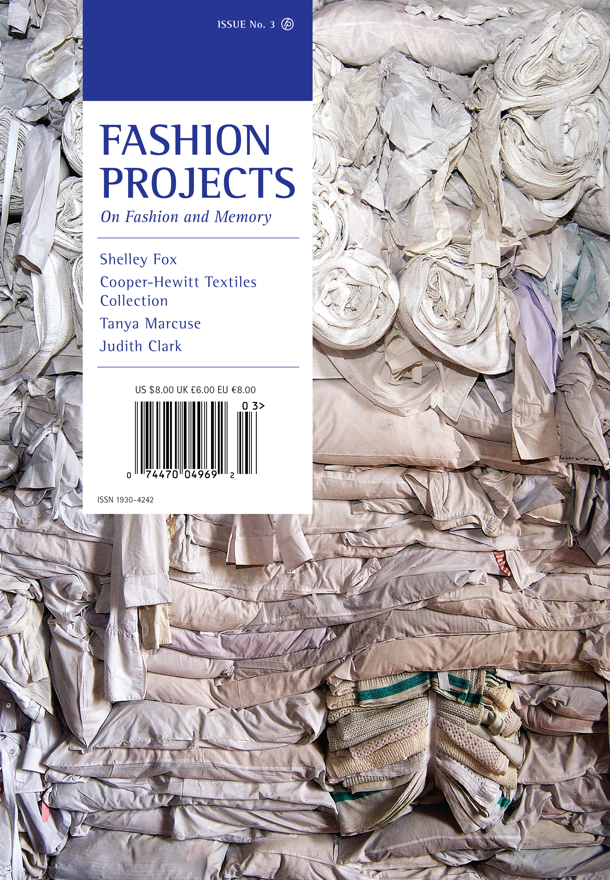


Fashion Projects #5 is devoted to fashion curation, examining the meteoritic rise in relevance of fashion exhibitions.
It features interviews with an eclectic assortment of leading practitioners from different corners of the world. The issue includes long Q&As with Harold Koda, the longtime, recently retired curator of the Met’s Costume Institute, as well as the Museum at FIT’s veteran leader Valerie Steele. It also features interviews with curators in Antwerp (the ModeMuseum’s Kaat Debo), Toronto (Royal Ontario Museum’s Alexandra Palmer) and Venice (Maria Luisa Frisa); academics studying the field (Hazel Clark, Annamari Vänskä, and Alistair O’Neill); and, giving an on-the-ground perspective, the Met’s head conservator, Sarah Scaturro. The issue’s cover stars Greer Lankton’s sculptural representation of legendary Vogue editor and Costume Institute doyenne Diana Vreeland, who continues to loom over the field years after her death.
Table of Contents
Introduction
Showmanship and History: An Interview with Harold Koda by Francesca Granata
Woman of Steele: An Interview with Valerie Steele by Lisa Santandrea
Exploring Fashion’s Openness: An Interview with Kaat Debo by Alex Esculapio
London, After a Fashion Curator: An Interview with Alistair O’Neill by Alexis Romano
Curation and Conservation: An Interview with Sarah Scaturro by Mae Colburn
Reflections on Fashion Curating
An Interview with Hazel Clark and Annamari Vänskä
Fashion in the Vast Museum: An Interview with Alexandra Palmer by Ingrid Mida
Restless Curating: An Interview with Maria Luisa Frisa by Marco Pecorari