FP: And were “the torched sequins” developed in the same collection or was it the later? Was it important to you that both gave an idea of the passage of time?
SF: The sequins were developed 4 years later, in 2000. To be honest, the passage of time wasn’t necessarily my main concern with those two collections. I did something else which related more directly to that concept in 2004. I did a scarf project which was called “Fashion and Modernity.” I worked really close with the fashion theorist Caroline Evans on it, as she was in charge of the larger project funded by the Arts Humanities Research Council, which was called “Fashion and Modernity.” There was much more of a memory idea in that one. It started with about 200 scarves, again still loom felted. They were made because I had become obsessed with photography, and in particular carte de vista from the 19th century. Those little photographs from when society first started to be photographed. I had found them in a flea market, and was intrigued by the fact that people’s family boxes of photographs end up in the market stands. There was a real fascination with the histories of the people in the photographs. I would keep asking myself: “Who are they? What do they do? I wonder if their granddaughter is still alive. Did they have children or not?”
FP: Did you use the carte de vista in tandem with the scarf for the “Fashion and Modernity” project?
SF: Yes, we had two hundred scarves of about 9 or 8 different colors. We drew around one of the cards to get an idea of the size and from that template we put it over the scarf, And we found this paste, which bleaches the color from the scarf and would leave a trace of the card. It’s similar to when you have an old picture on the wall and you remove it, there is a trace of what was left. We attached one card per scarf and we actually ended up giving the scarves away…
FP: And you did so to local merchants?
SF: Yes, the project had to be in and around the area of Charing Cross Road in London [where Central Saint Martins is located]. At the same time as part of the same project, Alistair O’Neil was curating a photography exhibition on Charing Cross Road and Caroline Evans was doing her work about it. I worked with Time Out for the project. We handpicked 23 independent stores in and around Charing Cross Road. It had to do with the fact that Soho (in London) is trying to hang on—maybe not successfully—to the idea of being a village within the city, so it was about preserving your favorite stores: your favorite café, your favorite grocer or fish and chips shops, whatever they might be. I picked those particular stores because of their independent feel and because they had their own identity. They were not like any high street stores in England, which tend to be very similar.
FP: It’s mainly chains..
SF: Yes, it’s all chains, and they are crucifying all the neighborhood stores up and down the country. We chose stores listed in Time Out and we asked each store to give a number of scarves away to any costumer they wanted to…
FP So they also got to pick their favorite costumers?
SF: Yes, or they found a way of choosing them. This great independent cinema in Soho called Curzon told me later on that a guy had lost his house keys at the cinema, and so he went back to the cinema to the lost and found, where they gave him the key, as well as one of my scarves. From then on, they decided that every first customer of the day who went to lost and found would get a scarf. They started their own stories. Each store started to do its own thing, which was quite interesting
FP: So in a way you were combining these random people’s memories with the histories of local merchants in Soho …
SF: Yes, and inside the packet we put together a questionnaire for the people to answer, through email or with a pre-stamped envelope, and it would ask questions like: “How would you like to be remembered?” “What do you think of these photo cards being on the scarf?” “What’s your reaction to it?” “Do you carry photographs of friends, family, lovers around with you?”
FP: Did you actually get some of the questionnaire back?
SF: Yes, we got loads. Some people were really upset by the whole situation. They were freaked out by it, “No, I wouldn’t want to be remembered in this way.” And other people went to the other extreme. One girl wrote an entire essay on the characters in the photograph, sort of like a play…
FP: So it became this participatory project in a way! Going back in time a bit, you also did a collection and a presentation at the ICA in 2002, which was based on family portraits, but, in that case, your own family portrait?





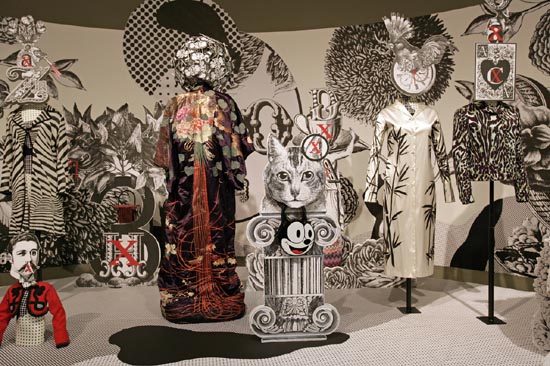

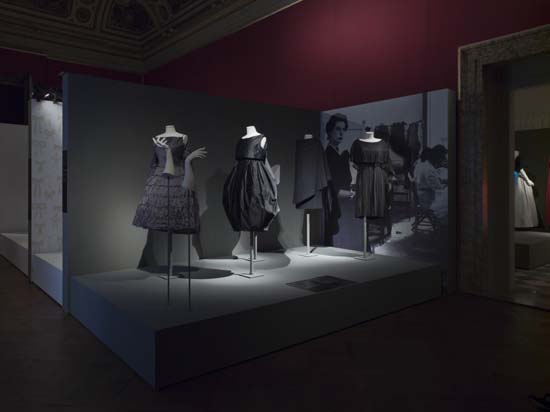






Fashion Projects #5 is devoted to fashion curation, examining the meteoritic rise in relevance of fashion exhibitions.
It features interviews with an eclectic assortment of leading practitioners from different corners of the world. The issue includes long Q&As with Harold Koda, the longtime, recently retired curator of the Met’s Costume Institute, as well as the Museum at FIT’s veteran leader Valerie Steele. It also features interviews with curators in Antwerp (the ModeMuseum’s Kaat Debo), Toronto (Royal Ontario Museum’s Alexandra Palmer) and Venice (Maria Luisa Frisa); academics studying the field (Hazel Clark, Annamari Vänskä, and Alistair O’Neill); and, giving an on-the-ground perspective, the Met’s head conservator, Sarah Scaturro. The issue’s cover stars Greer Lankton’s sculptural representation of legendary Vogue editor and Costume Institute doyenne Diana Vreeland, who continues to loom over the field years after her death.
Table of Contents
Introduction
Showmanship and History: An Interview with Harold Koda by Francesca Granata
Woman of Steele: An Interview with Valerie Steele by Lisa Santandrea
Exploring Fashion’s Openness: An Interview with Kaat Debo by Alex Esculapio
London, After a Fashion Curator: An Interview with Alistair O’Neill by Alexis Romano
Curation and Conservation: An Interview with Sarah Scaturro by Mae Colburn
Reflections on Fashion Curating
An Interview with Hazel Clark and Annamari Vänskä
Fashion in the Vast Museum: An Interview with Alexandra Palmer by Ingrid Mida
Restless Curating: An Interview with Maria Luisa Frisa by Marco Pecorari