

Fashion Projects: 15 Years of Fashion in Dialogue, an anthology of the New York–based journal Fashion Projects, is out now on Intellect Books!
Past Issues

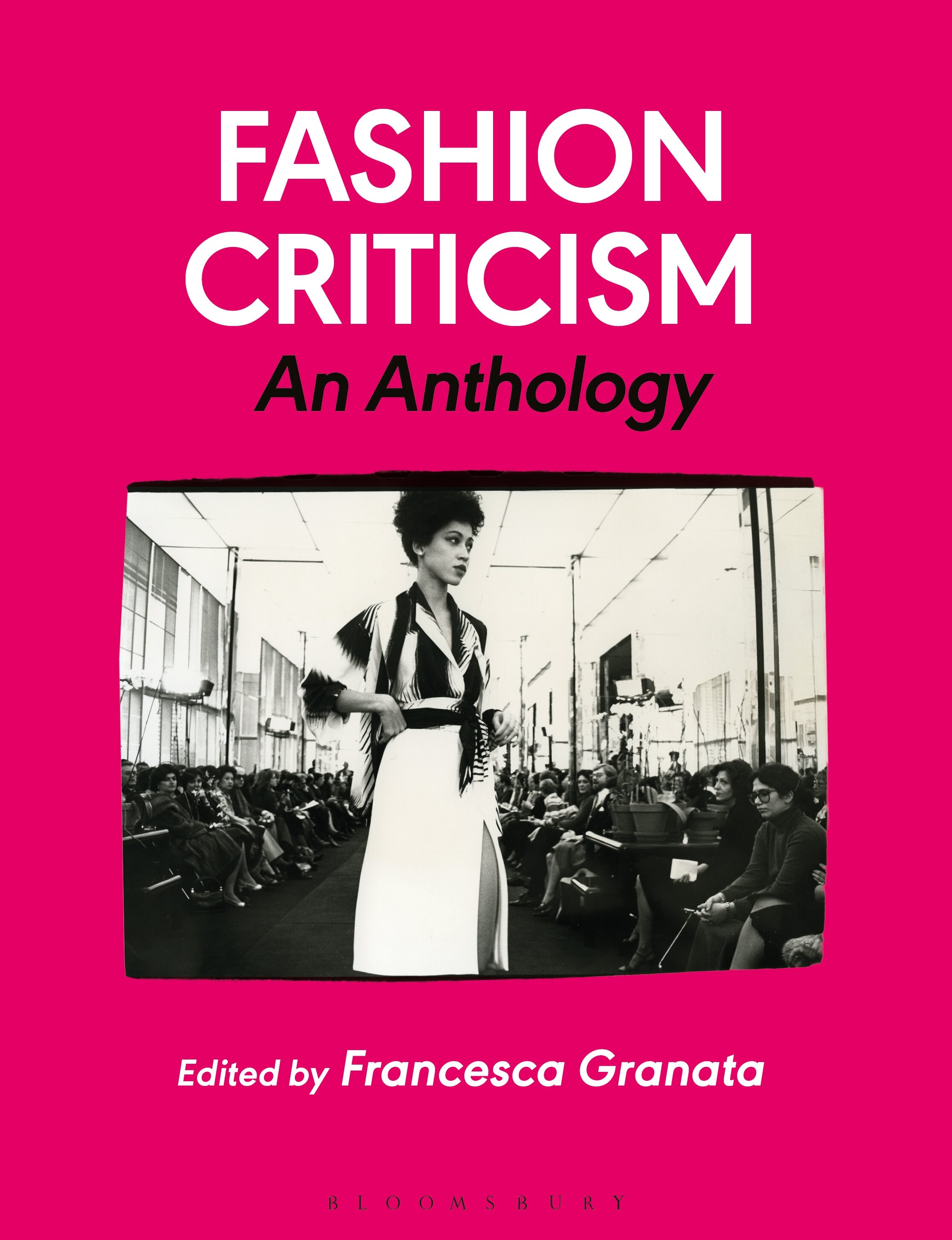
This issue is devoted entirely to the subject of fashion criticism—the first such study devoted to the cultural field. It features extended interviews with leading practitioners of fashion criticism including W editor Stefano Tonchi, International Herald Tribune critic Suzy Menkes, The New Yorker’s Judith Thurman, New York Times writer Guy Trebay, and Robin Givhan, the first fashion critic to receive a Pulitzer Prize.
Table of Contents
Transdisciplinary Practices: An Interview with Stefano Tonchi by Francesca Granata
Fashion Criticism—A Critical View: An Interview with Robin Givhan by Michelle Labrague
This Is Not a Fashion Critic: An Interview with Guy Trebay by Jay Ruttenberg
“Women’s Work”: An Interview with Judith Thurman by Francesca Granata
Bill Cunningham Multimedia Man by Jay Ruttenberg
Fashion Criticism as Political Critique: An Interview with Lynn Yaeger by Sarah Scaturro
The Critic as Artist: An Interview with Mariuccia Casadio by Marco Pecorari
On Fashion Futures: An Interview with Suzy Menkes by Lucy Collins
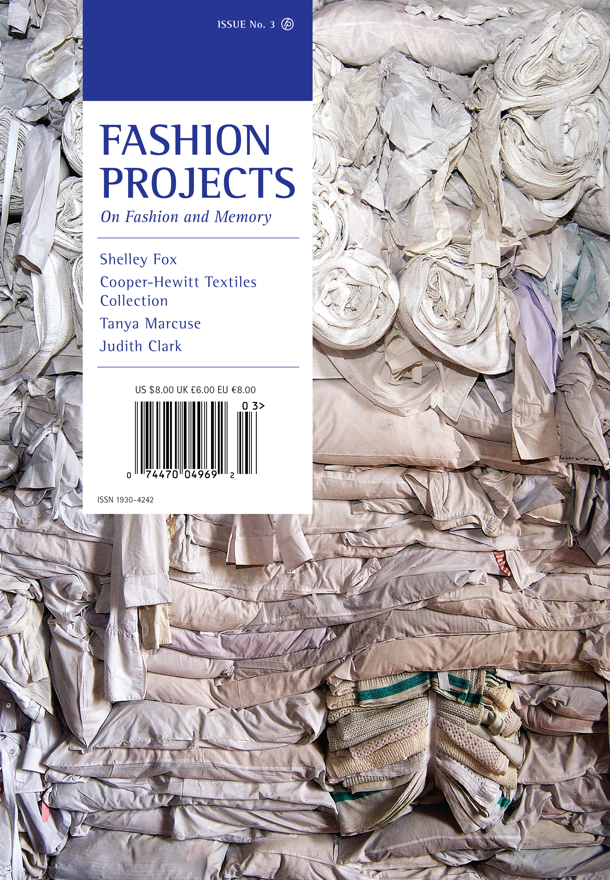
Table of Contents 00— Editorial Letter
01— Fashion as Expanded Practice: An Interview with Shelley Fox by Francesca Granata
02— Experiments in Fashion Curation: An Interview with Judith Clark by Sarah Scaturro
03— Televisual Memories: An Interview with Eugenia Yu by Erin Lindstrom
04— Reflections on Absence Photo Essay: Cooper-Hewitt Textiles Collections Written by Sarah Scaturro; Photographed by Keith Price
05— American Industrial Past: Ohio Knitting Mills by Lisa Santandrea
06— Ready Made Memories: Erica Weiner’s Jewelry by Francesca Granata
07— Imprints of the Body: An Interview with Tanya Marcuse by Tamsen Schwartzman

The second issue of Fashion Projects covers fashion and art collectives, as well as collaborative projects between artists and fashion designers. It’s meant as a reminder of the inherently collaborative nature of fashion which is often forgotten as, particularly at the higher ends of the industry, so much rides on the “individual” designer.
Table of Contents
00. Editorial Letter
01. Elsewhere: Between Art Collaborative and House of Wonder by Francesca Granata
02. Ephemeral Conversations: Simon Periton’s Collaborations with Raf Simons, Philip Treacy and Junya Watanabe by Sonya Mooney
03. Elegant Subversions: An Interview with Cat Chow
04. Show Me Your Reality and I’ll Show You Mine: An Interview with Penny Martin, editor-in-chief of SHOWstudio.com by Patty Chang
05. Studio 5050’s Fuzzy Fashion by Sarah Scaturro
06 Boundless Practice: An Interview with Susan Cianciolo by Sonia Mooney
07 At the Forefront of Austrian Fashion: An Interview with UNIT F
08 Serpica Naro: The Great Fashion Swindle by Francesca Granata
09 Clashing Hues: European Protests Movements and Costume by Lidia Ravviso
10 Pierre Bourdieu Goes to Town by Jay Ruttenberg
Fashion Projects #5 is devoted to fashion curation, examining the meteoritic rise in relevance of fashion exhibitions.
It features interviews with an eclectic assortment of leading practitioners from different corners of the world. The issue includes long Q&As with Harold Koda, the longtime, recently retired curator of the Met’s Costume Institute, as well as the Museum at FIT’s veteran leader Valerie Steele. It also features interviews with curators in Antwerp (the ModeMuseum’s Kaat Debo), Toronto (Royal Ontario Museum’s Alexandra Palmer) and Venice (Maria Luisa Frisa); academics studying the field (Hazel Clark, Annamari Vänskä, and Alistair O’Neill); and, giving an on-the-ground perspective, the Met’s head conservator, Sarah Scaturro. The issue’s cover stars Greer Lankton’s sculptural representation of legendary Vogue editor and Costume Institute doyenne Diana Vreeland, who continues to loom over the field years after her death.
Table of Contents
Introduction
Showmanship and History: An Interview with Harold Koda by Francesca Granata
Woman of Steele: An Interview with Valerie Steele by Lisa Santandrea
Exploring Fashion’s Openness: An Interview with Kaat Debo by Alex Esculapio
London, After a Fashion Curator: An Interview with Alistair O’Neill by Alexis Romano
Curation and Conservation: An Interview with Sarah Scaturro by Mae Colburn
Reflections on Fashion Curating
An Interview with Hazel Clark and Annamari Vänskä
Fashion in the Vast Museum: An Interview with Alexandra Palmer by Ingrid Mida
Restless Curating: An Interview with Maria Luisa Frisa by Marco Pecorari