
"Luxury" Exhibit at the Museum at FIT
/
Gabrielle “Coco” Chanel, 1925. Photo Irving Solero
The other day, I visited the “Luxury” exhibit, part of the rotating permanent collection at the Museum at FIT. I was given a tour from Tamsen Schwartzman, a research curator who organized the exhibit together with Valerie Steele and Fred Dennis. The exhibit, which opened in May and will remain on view until November 10th, made some very interesting points on the relation between luxury (as a widespread concept and eventually industry) and the rise of the bourgeoisie. Thus, the show started in the 18th century and continued up to the present day. The garments and accessories in the exhibit, which were for the most part arranged chronologically, made a very convincing argument for how luxury is ultimately a constructed cultural category which is constantly shifting and, thus, always historically and geographically specific. The exhibit went from an18th century heavily embroidered men coat (which exemplified the decorative character of menswear at the time) to a late 19th century extremely embellished ball gown which stands as evidence of “the feminization of luxury,” and of Veblen’s theory of “conspicuous consumption.” This move took place as menswear became pared down and opulence and wealth became displaced and displayed onto women.
In the early part of the exhibit covering the early 20th century, it’s quite interesting to compare a Chanel’s dress in its effortless look to a heavily decorated early 20th century Worth gown, and to a more theatrical Poiret dress. As the 20th century progresses, the ’80s stand out as the epitome of ostentatious luxury followed by the ’90s, with its more understated look and the concept of stealth luxury. The exhibit ends with suggestions of what constitutes luxury today:
It often has to do with the personal, the experiences which are often translated into the uniqueness of a piece, and the story associated with the brand or sometimes the individual garment. This made me think of an article on glamour by Elizabeth Wilson which I recently read in Fashion Theory, and which discussed glamour (perhaps counter intuitively) in relation to the dandy, with its aesthetic of restraint, and of refusal. “Glamour,” writes Wilson, is “elitists” and it “depends on what is withheld, on secrecy, hints , and the hidden.” Thus, one is left to wonder whether luxury in contemporary time, where the concept has become ubiquitous, is ultimately to be found in some form of refusal…
Francesca

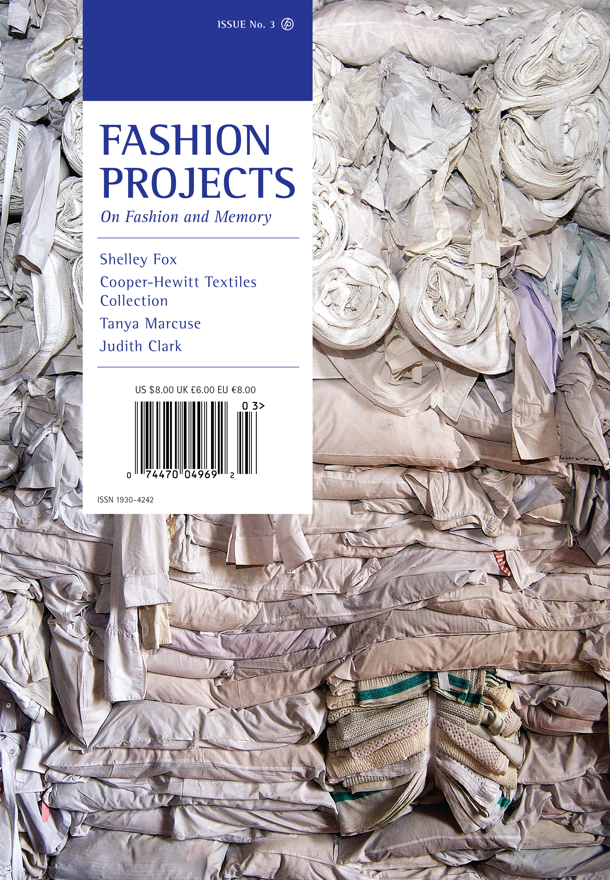


Fashion Projects #5 is devoted to fashion curation, examining the meteoritic rise in relevance of fashion exhibitions.
It features interviews with an eclectic assortment of leading practitioners from different corners of the world. The issue includes long Q&As with Harold Koda, the longtime, recently retired curator of the Met’s Costume Institute, as well as the Museum at FIT’s veteran leader Valerie Steele. It also features interviews with curators in Antwerp (the ModeMuseum’s Kaat Debo), Toronto (Royal Ontario Museum’s Alexandra Palmer) and Venice (Maria Luisa Frisa); academics studying the field (Hazel Clark, Annamari Vänskä, and Alistair O’Neill); and, giving an on-the-ground perspective, the Met’s head conservator, Sarah Scaturro. The issue’s cover stars Greer Lankton’s sculptural representation of legendary Vogue editor and Costume Institute doyenne Diana Vreeland, who continues to loom over the field years after her death.
Table of Contents
Introduction
Showmanship and History: An Interview with Harold Koda by Francesca Granata
Woman of Steele: An Interview with Valerie Steele by Lisa Santandrea
Exploring Fashion’s Openness: An Interview with Kaat Debo by Alex Esculapio
London, After a Fashion Curator: An Interview with Alistair O’Neill by Alexis Romano
Curation and Conservation: An Interview with Sarah Scaturro by Mae Colburn
Reflections on Fashion Curating
An Interview with Hazel Clark and Annamari Vänskä
Fashion in the Vast Museum: An Interview with Alexandra Palmer by Ingrid Mida
Restless Curating: An Interview with Maria Luisa Frisa by Marco Pecorari