
Sarah Palin: How Post-Feminism turned into Pre-Feminism
/
Sarah Palin's Red Shoes
Sarah Palin’s much publicized fashion choices and, now, fashion budget make for an interesting argument about how the post-feminist look can be appropriated in ways which are antithetical to what the look was originally meant to portray. If we understand post-feminist fashion as a reappropriation of symbols of femininity—high-heels, form-fitting skirts and colors which have traditionally being coded as feminine—by a “sexually liberated woman,” we can see how the vice presidential hopeful has been sporting some tenants of that look against the grain, as she is campaigning on a platform critical of sexual liberation altogether.
Post-feminism is best exemplified (as media theorist Angela McRobbie has pointed out) by media representation of women, such as Sex and the City and the Bridget Jones’ Diaries. Ultimately, the fact that the Republican nominee is embracing at least some central elements of the look not only goes to show the popularity of such representations, it also stands as evidence that the longstanding criticism of post-feminism as reactionary might, in this case, be accurate.
Francesca




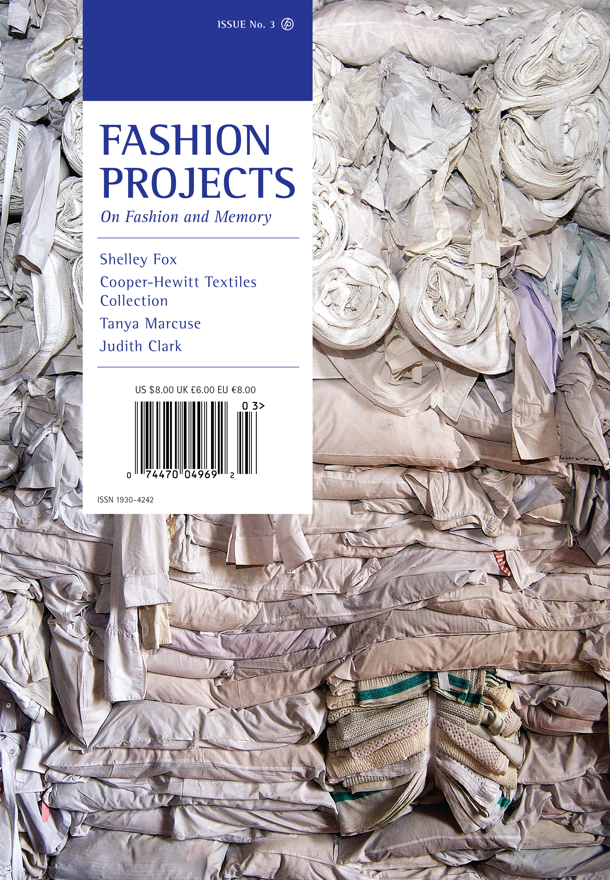


Fashion Projects #5 is devoted to fashion curation, examining the meteoritic rise in relevance of fashion exhibitions.
It features interviews with an eclectic assortment of leading practitioners from different corners of the world. The issue includes long Q&As with Harold Koda, the longtime, recently retired curator of the Met’s Costume Institute, as well as the Museum at FIT’s veteran leader Valerie Steele. It also features interviews with curators in Antwerp (the ModeMuseum’s Kaat Debo), Toronto (Royal Ontario Museum’s Alexandra Palmer) and Venice (Maria Luisa Frisa); academics studying the field (Hazel Clark, Annamari Vänskä, and Alistair O’Neill); and, giving an on-the-ground perspective, the Met’s head conservator, Sarah Scaturro. The issue’s cover stars Greer Lankton’s sculptural representation of legendary Vogue editor and Costume Institute doyenne Diana Vreeland, who continues to loom over the field years after her death.
Table of Contents
Introduction
Showmanship and History: An Interview with Harold Koda by Francesca Granata
Woman of Steele: An Interview with Valerie Steele by Lisa Santandrea
Exploring Fashion’s Openness: An Interview with Kaat Debo by Alex Esculapio
London, After a Fashion Curator: An Interview with Alistair O’Neill by Alexis Romano
Curation and Conservation: An Interview with Sarah Scaturro by Mae Colburn
Reflections on Fashion Curating
An Interview with Hazel Clark and Annamari Vänskä
Fashion in the Vast Museum: An Interview with Alexandra Palmer by Ingrid Mida
Restless Curating: An Interview with Maria Luisa Frisa by Marco Pecorari