Fashion and Design at the Victoria & Albert

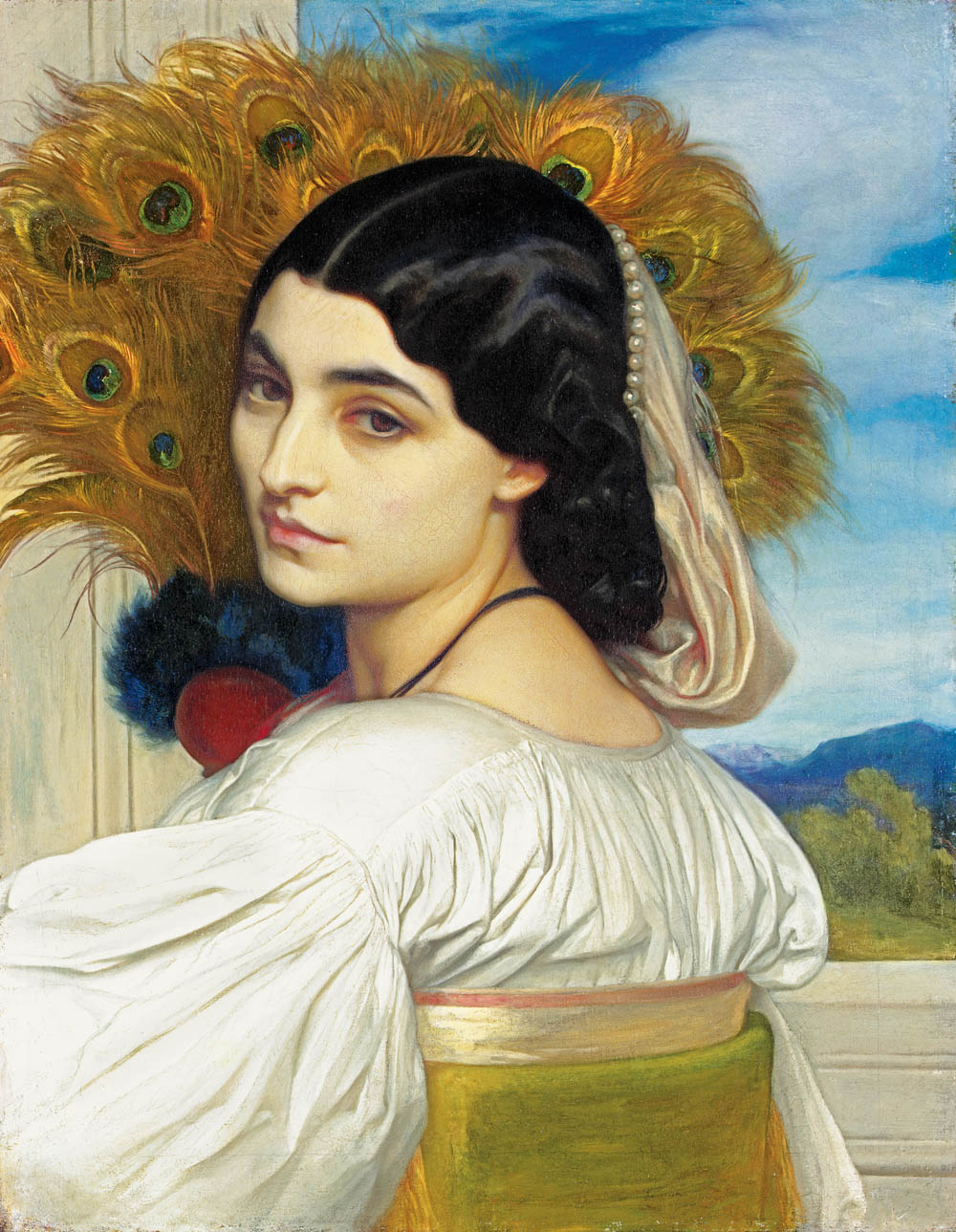
Pavonia, by Frederic, Lord Leighton, 1858-59, © Private Collection c/o Christie's

by Laura McLaws Helms

Currently on view at the Victoria & Albert museum in London are two exhibitions that deal with highly refined design, from a century apart. “The Cult of Beauty” (on view until July 17th) looks at the Aesthetic movement that sprouted from the members of Pre-Raphaeliteism in England in the 1860s. Concerned with “art for art’s sake,” the movement reached its apogee in the 1880s and 90s when it moved from strictly the province of artists to the passion of aristocrats and then into the mainstream. While it arose from the fine arts, Aestheticism was concerned with beautiful design in all aspects of life resulting in a broad range of Aesthetic design that is covered in this large exhibition. Sequenced chronologically, the curator, Stephen Calloway, deftly intermixes paintings, sculpture, furniture and more in rooms painted in such Aesthetic tones as peacock and ‘artistic’ green.

A small section devoted to Aesthetic dress showcases their desire to reject “the corsetry, uniformity and commercialism of high fashion” while encouraging “individuality” and drapery. Notably different than the upholstered, bustled dresses prevalent at the time, on view is a “late Medieval” sage green velvet dress from Liberty’s Artistic and Historic Costumes Studio. A return to the ideals of the Middle Ages, when craftsmanship was seen to be celebrated, was one of the main tenants of Aesthetic design and its influence is present in costume in the loose, draped gowns and flattened nature motifs. Men’s aesthetic dress is irrevocably associated with Oscar Wilde’s velvet knickerbocker suit, of which a variation is on display. Other garments and accessories, including a smoking cap, reflect the drawing of inspiration from the East. Though the selection of dress in the exhibition is limited, for the lover of fashion the whole show is a glorious paean to all that is beautiful, making for an irresistibly enjoyable experience.
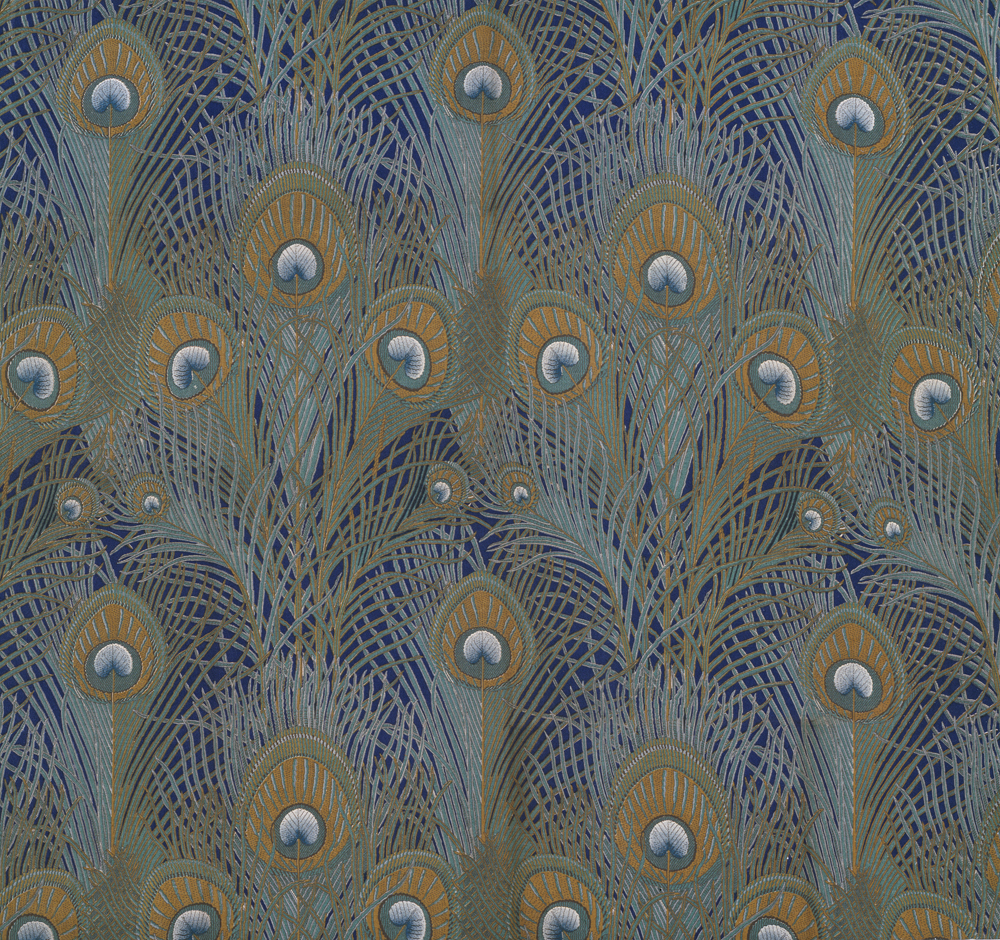
"Peacock Feathers" furnishing fabric, by Arthur Silver for Liberty & Co., 1887, © V&A Images

A total contrast, nearby is the main exhibition space for “Yohji Yamamato” (on view until July 10th), a bright hall with scaffolding erected down one side. The central area holds over sixty of his designs, mainly from the 1990s and 2000s, while on the wall behind the scaffold is a multi-media timeline charting his forty years in design. The mannequins are arranged in small groups, standing at eye level with no barriers between the viewers and them. This allows for almost unprecedented access to garments in a fashion exhibition — inviting the museumgoer to walk around the mannequin, come up close to analyze fabric and manufacture, do everything but touch. Ligaya Salazar, the curator, visited the Yamamoto archives, choosing a selection of women’s and men’s pieces that reflect his individual vision, combining an Asian belief in the primacy of the cloth — the exhibition begins with Yamamoto’s quote of how “fabric is everything” — with a deep interest in the work of Western couturiers.
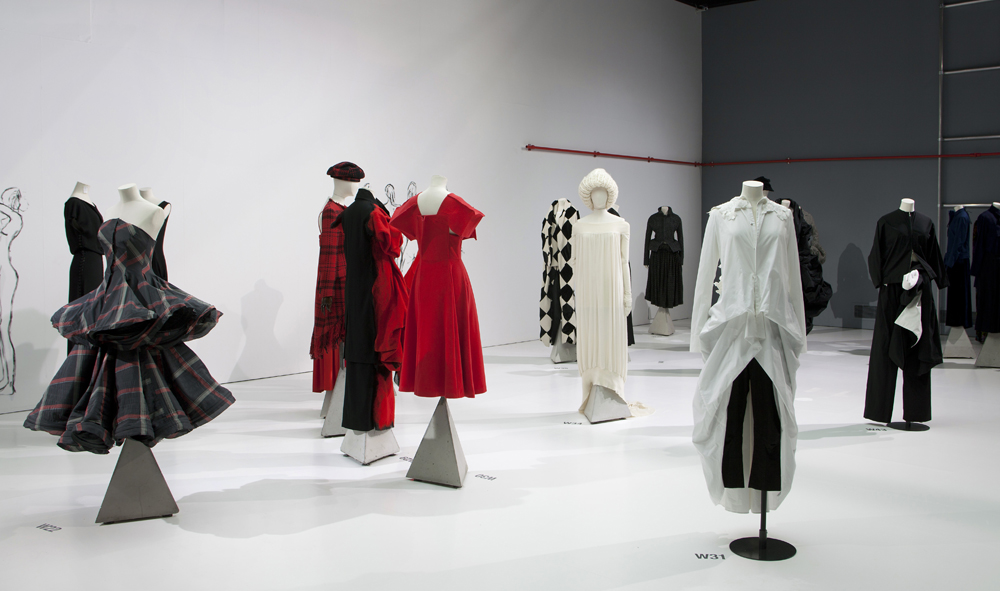
Yohji Yamamoto exhibition at the V&A, 2011

Dotted around the museum are site-specific installations of some of his pieces, determined to reflect aspects of “Yohji Yamamoto’s design world.” Situated in amongst works of art and historical rooms, his designs take on new meaning in their new environments — red wool dresses and coats shown with fifteenth century tapestries blend with the era yet also emerge as completely modern and alien to the tapestries. While the use of installations spread out amongst the museum creates a certain engagement with the viewer, a similar interaction between varied museum space and Yamamoto’s garments was already done in the three-part retrospective of his work, “Triptych,” held in 2005 and 2006 at Galleria d’Arte Moderno of Palazzo Pitti in Florence, the Musee de la Mode et du Textile in Paris and the MoMu in Antwerp. The exhibition also fails to provide any information on Yamamoto’s work processes — though the expertly and innovatively cut pieces might be thought to speak for themselves, a greater depth of information would be appreciated. It is clear from the blog Ligaya Salazar maintained during the process of curating this exhibition that she learned a great deal of knowledge about Yamamoto and his work, which would have made a welcome addition to the two didactics included and would have helped to impart a more complete understanding of the Japanese enigma.
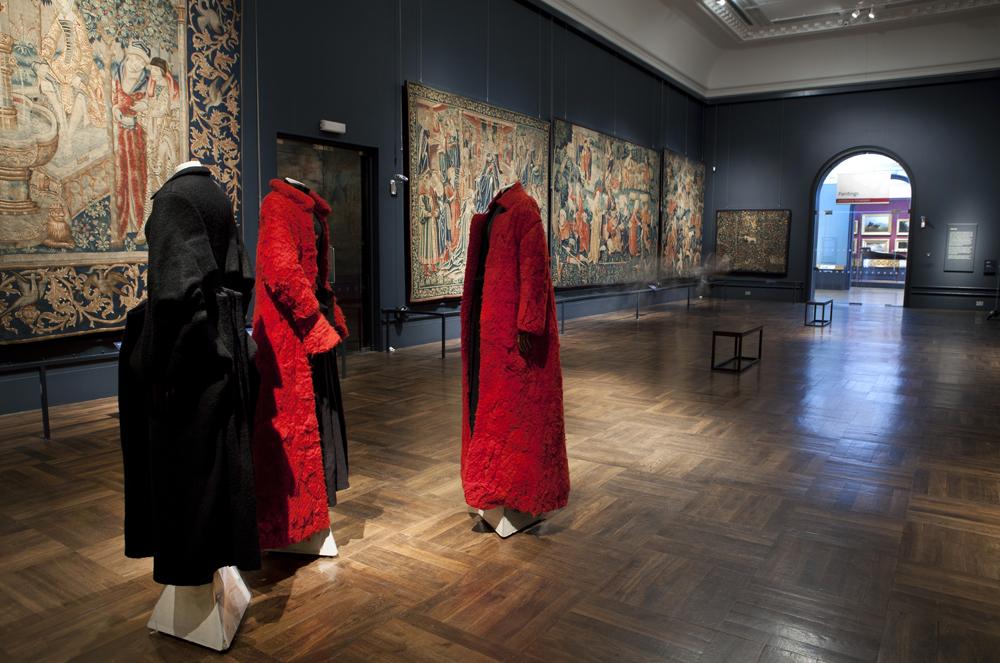
Yohji Yamamoto, Satellite display at the Tapestry Gallery, V&A, 2011

FASHION CUTS: PUBLIC MEDIA AND THE FASHIONING OF REALITY

Coming up this Tuesday May 10th as part of the Parsons Festival is a panel discussion with Tim Gunn and Scott Schuman:

"From ‘The Fashion Show’ on television, ‘The Sartorialist’ website, ‘Bill Cunningham New York’ the movie, to 'Fruits' the Japanese magazine, fashion is increasingly a visual part of our global reality. What does this mean? Looking at different forms of public and social media, this panel discussion featuring Tim Gunn and “The Sartorialist” Scott Schuman will discuss the cultural significance of contemporary constructions of fashion."

Moderated by Hazel Clark, Dean of the School of Art and Design History and Theory; with an introduction by Heike Jenss, Director of the MA Fashion Studies program.

Savage Beauty: Alexander McQueen at the Metropolitan Museum of Art

Alexander McQueen Savage Beauty, Courtesy of the Metropolitan Museum of Art

by Ingrid Mida

The world is experiencing a McQueen moment” said Thomas P. Campbell, director of the Metropolitan Museum of Art in his opening remarks to the press at today’s preview of the exhibition Savage Beauty: Alexander McQueen.

A more fitting choice of words could not be spoken. Until now, the extraordinary and rare genius of Lee Alexander McQueen’s artistic vision was not widely appreciated. In this retrospective presentation of about one hundred garments and seventy accessories from the late designer’s relatively short career from 1992-2010, The Metropolitan Museum has honored and documented the enormous legacy of McQueen to the world of fashion and art.

Alexander McQueen once said “For me, what I do is an artistic expression of that which is channeled through me. Fashion is just the medium.”

Not defined by stylistic convention, McQueen explored themes of love, nature, sex, and politics in terms of clothing and accessories for women. McQueen was also fascinated by the polarities of light/dark, wonder/terror, ugly/beautiful, life and death. Although his medium was fashion, McQueen’s thematic precepts were the opus of contemporary art and the exhibition celebrates that aspect of his work.

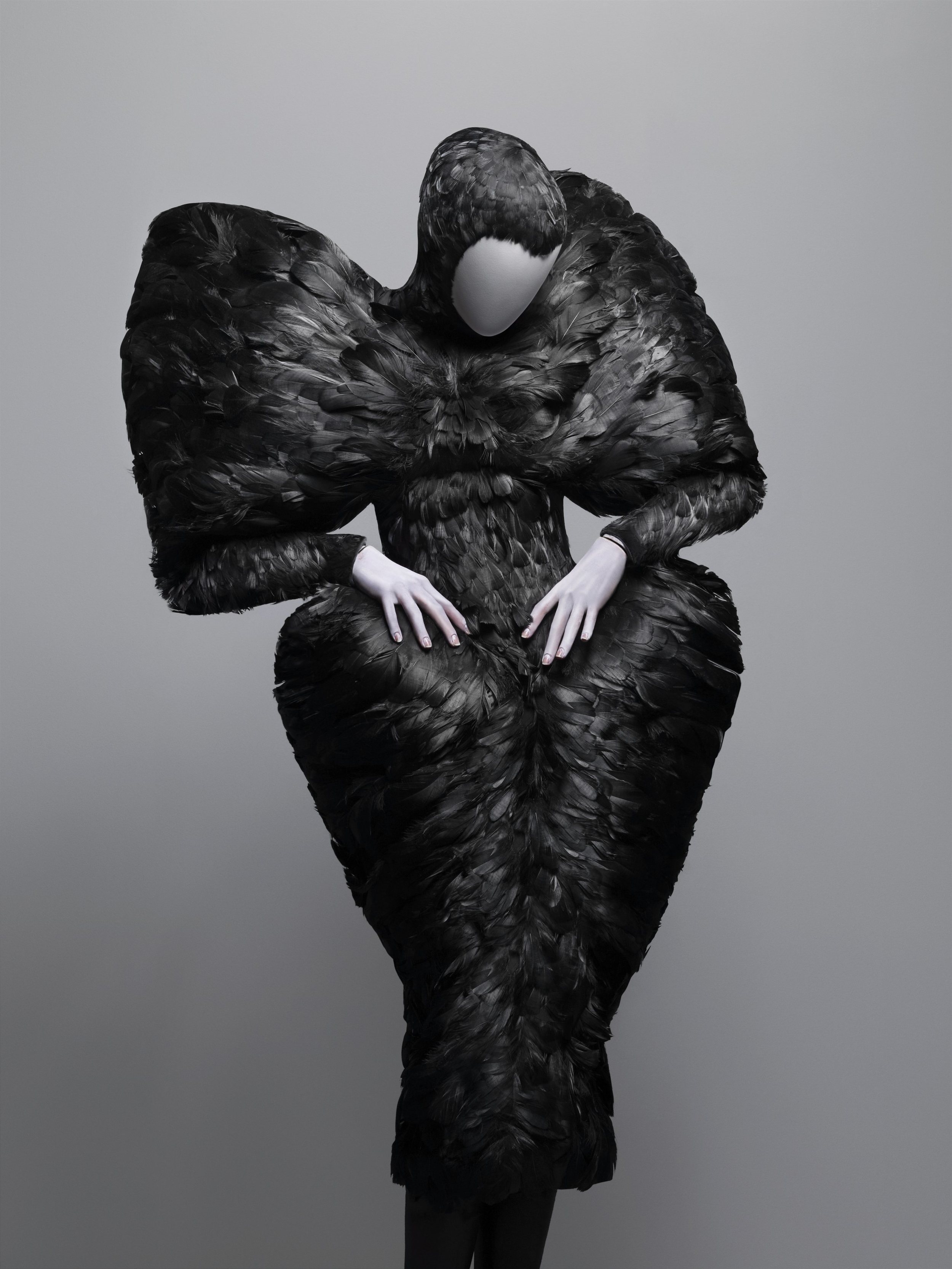
McQueen Black Duck Feathers Fall 2009, Courtesy of the Metropolitan Museum of Art

The expansiveness of McQueen’s vision is apparent in not only the thematic underpinnings to his work but also in his innovative use of materials. He manipulated feathers, horns, wood, glass, flowers, horsehair and shells into coverings for the female form. Mollusk shells became a corset, feathers became a skirt, alligator heads peeked out of jacket epaulettes, carved wooden boots became prosthetic legs, a jawbone became jewelry. There can be no doubt that he was an artist who presented his work in runway spectacles instead of a gallery. Looking to provoke reactions from his audience, he scripted the models for the runway shows to act with the charged emotions of a performance piece.

Presented thematically instead of chronologically, the exhibition defines McQueen’s work as a Romantic individualist, a “hero-artist who staunchly followed the dictates of his inspiration,” in the words of exhibition curator Andrew Bolton. Divided into galleries defined by themes of romantic historicism, naturalism, primitivism, and nationalism, the exhibition is evocative of a gothic fairy tale. One moves from light into darkness and the stuff of dreams.

Creating an exhibition that translated the spectacle of a McQueen show into the confines of a museum setting seems like a virtually impossible proposition. But curator Andrew Bolton and the exhibition designers captured the spirit of McQueen in a multi-dimensional sensory immersion into his oeuvre.  Sound, air and light are designed to synthesize the effect of being at a McQueen runway show. Wind effects create movement of the garments. Music and music and light are manipulated to achieve a dream like quality to the galleries. Video projections within, behind, and around the objects, and in one case on the ceiling, animate the displays and allow the visitor to check their reality with the looped clips from runway shows.

Much care has been given to the mannequins. Masks by Guido created out of leather, lace, linen and other materials conceal some of the mannequins faces and evoke a haunting presence. Some mannequins are headless and others look as if they are moving. Some sit on turntables or are backed by mirrors.

McQueen Gallery View Highland Rape, Courtesy of the Metropolitan Museum of Art

No detail has been overlooked in this hauntingly beautiful presentation. Several of the rooms bring to mind a Baroque palace with glass-fronted cabinets befitting such a place. One gallery is suggestive of the Victorian cabinet of curiosities and showcases accessories that were created in collaboration with others such as Philip Treacy and Shaun Leane.  And yet other galleries are modern and as disparate as the designer’s collections were from season to season. The exhibition is a showcase of unexpected delights, featuring the best examples of McQueen’s work sourced from the McQueen and Givenchy archive, as well as private collectors such as Daphne Guinness and Hamish Bowles.

The Metropolitan Museum of Art has set a new standard for exhibitions of costume. This exhibition is a fitting tribute to Lee Alexander McQueen’s extraordinary talent and is one of those shows that people will undoubtedly reference for years to come.

By Ingrid Mida

Ingrid Mida is a freelance writer, researcher and artist whose work explores the intersection between fashion and art. Based in Toronto, she is represented by Loop Gallery and also writes for a variety of journals. She will be the keynote speaker at the American Costume Society mid-west conference where she will talk about her artistic practice and when fashion becomes art.

Photos provided courtesy of the Metropolitan Museum of Art

Second Fashion in Film Festival Symposium

One more symposium on Fashion in Film is is taking place at the CUNY Graduate Center this Monday May 2nd from 5 to 7:30 pm. Among the impressive roster of speakers are Caroline Evans, who will speak on her current research on the early history of modelling and the fashion show.

"Since the emergence of cinema in the late-19th century, the role of costume, fabrics, and fashion has been crucial in conveying an aesthetic dimension and establishing a new sensorial and emotional relationship with viewers. Through the interaction of fashion, costume, and film it is possible to gauge a deeper understanding of the cinematic, its complex history, and the mechanisms underlying modernity, the construction of gender, urban transformations, consumption, technological and aesthetic experimentation.

Jody Sperling will speak on “Loïe Fuller and Early Cinema;” Caroline Evans Michelle Tolini Finamore on “‘Exploitation’ in Silent Cinema: Poiret and Lucile on Film;” and Drake Stutesman on “Spectacular Hats! A New Kind of Identity in a New Kind of Love (1963).” With moderator Amy Herzog and respondent Jerry Carlson."

The symposium which is organized by Eugenia Paulicelli in conjunction with the Fashion in Film Festival is co-sponsored by the Concentration in Fashion Studies, MA in Fashion: Theory, History, Practice in the MA Liberal Studies Program, Film Studies, Women’s Studies and the Center for Gay and Lesbian Studies.

Lady Gaga's Little Monsters...

Some of Lady Gaga's Little Monsters

by Francesca Granata

I recently went to a Lady Gaga concert as part of my research. The most surprising thing about it was the inventive and often DIY costumes worn by her fans. I caught a few of them on camera: a woman wearing a balloon skirt, one in a yellow body suit with Mickey Mouse ears that she self-painted. Someone else constructed Lady Gaga’s staggeringly tall heel-less shoes via an ingenious system of black electric tape, while others rendered more literal imitations of the pop star. Among these were a mother with her little girl, both sporting blond wigs and black leather outfits! Alas, no meat-dress emulator was in the crowd.

The pop star herself wore elaborate costumes, which are by now familiar either through her videos or television appearance.

Jay Ruttenberg—a contributing editor of Fashion Projects and a music critic at Time Out New York, wrote a in-depth review of the concert which praises Gaga’s ability of self-transformation over her music skills.

“Lady Gaga, if the conspiracy is not by now obvious, is the highly evolved master’s thesis of Tisch performance-art scholar Stefani Germanotta, who is currently completing her studies on the transformative nature of a pop, fashion and media phenomenon in the age of social media. Saturday night at Nassau Coliseum, Germanotta came one step closer to obtaining her degree, appearing before thousands of young participants dubbed her “Little Monsters” for the duration of the project”

For the full review and photo of the concert, visit Time Out New York