ARRRGH! Monsters in Fashion: An Exhibition at the Benaki Museum in Athens

by Francesca Granata

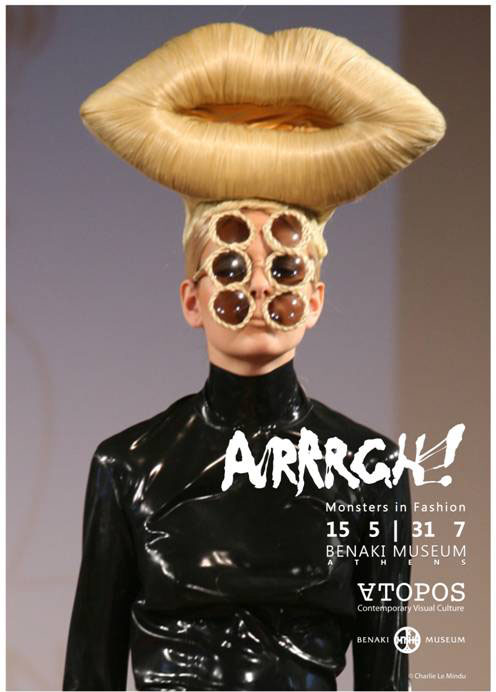
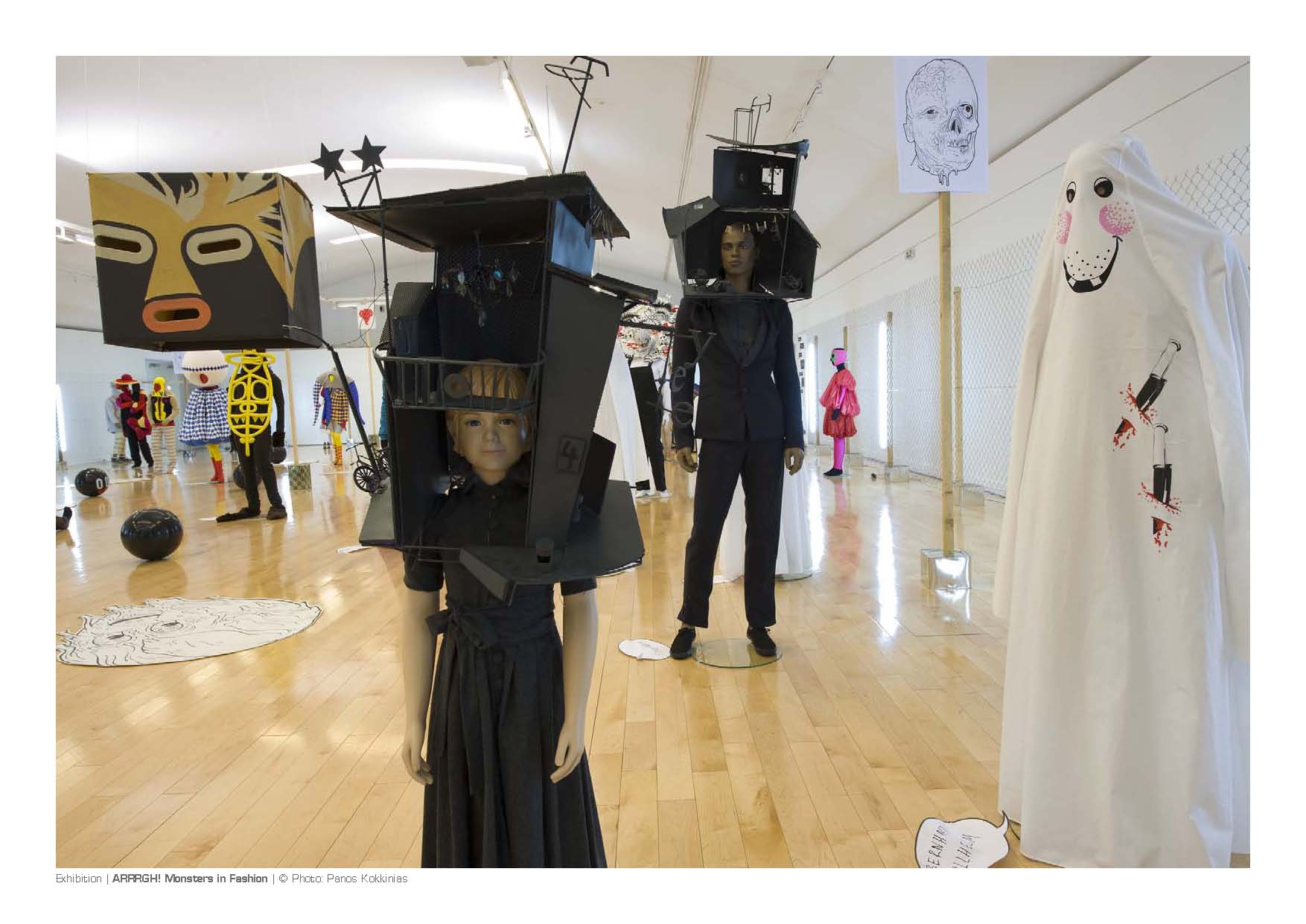
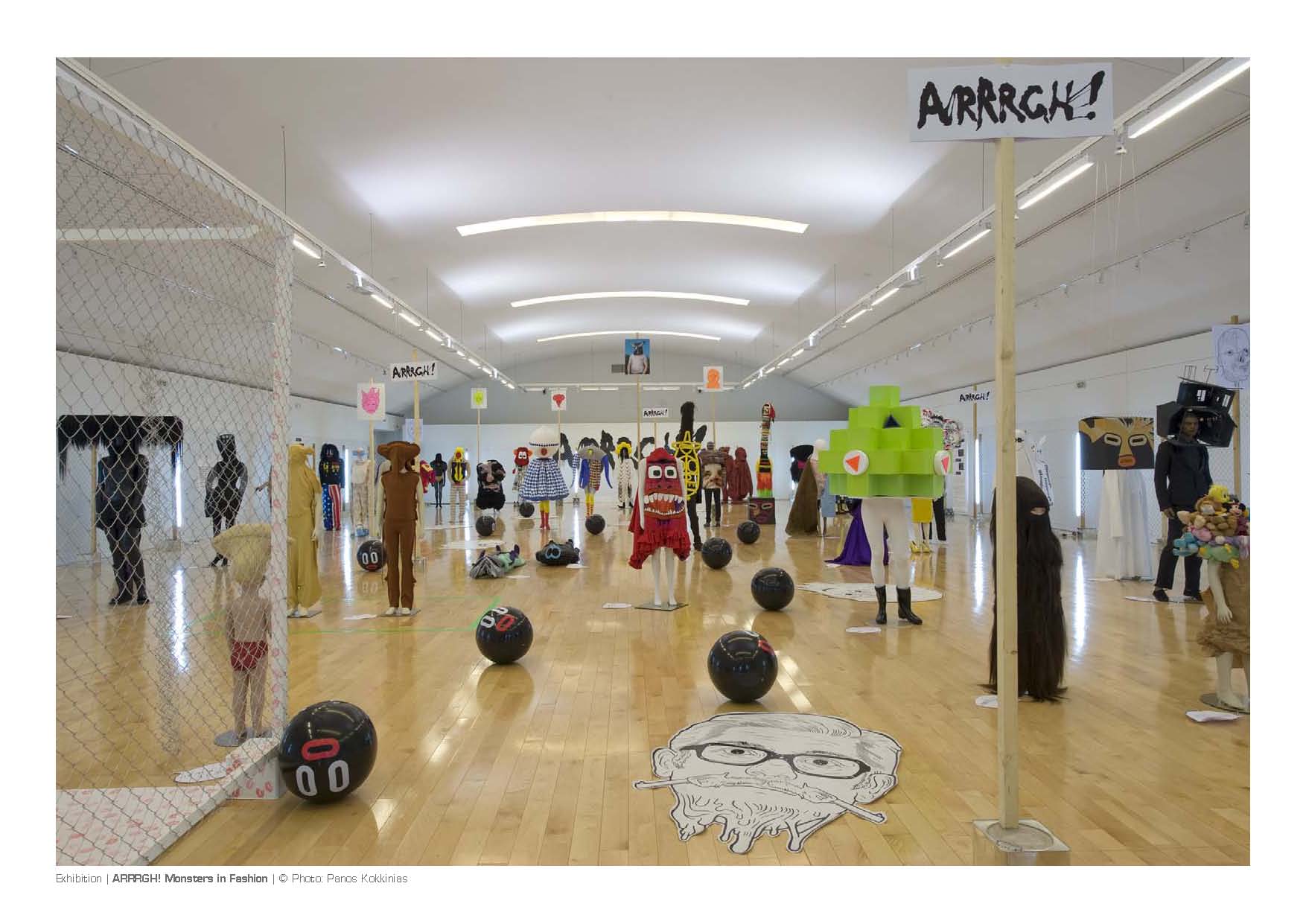
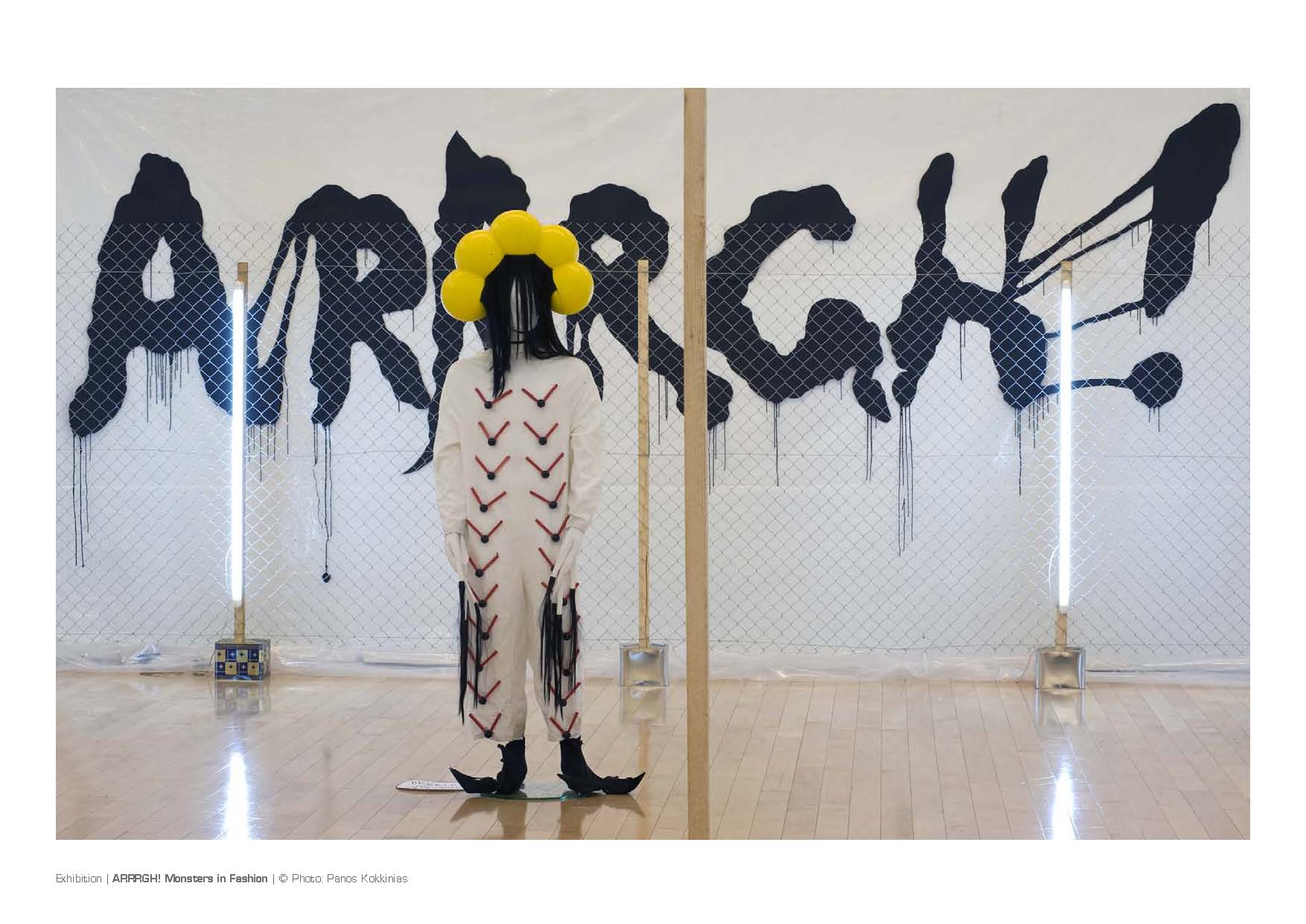
Currently on view at the Benaki Museum in Athens is the exhibition "ARRRGH! Monsters in Fashion." The exhibition includes the work of contemporary experimental designers and visual artists, including Martin Margiela, Walter Van Beirendonck, Bernhard Willhelm, Henrik Vibskov and Charles Le Mindu. "Monsters in Fashion" is curated by Vassilis Zidianakis, Creative Director of ATOPOS CVC, a non-profit cultural organization for the promotion of visual culture, which is also based in Athens and was founded in 2003 by Stamos Fafalios and Vassilis Zidianakis.

ATOPOS is unique in its function as an independent curatorial platform which promotes scholarship and organizes exhibitions on fashion and greater visual culture. It fills an important gap for independent curatorial voices and non-profit organizations in the field of fashion curation—a vital and established practice in the field of contemporary art, where organizations, such as Independent Curators International began as early as the 1970s. ATOPOS's touring exhibition "RRRIPP!!! Paper Fashion (currently on view in Melbourne) and the accompanying catalogue greatly advanced the scholarship on the use of paper in the history of fashion, as well as bringing forth novel exhibition practices.

The current exhibition "Monsters in Fashion" promises to do the same, as it was developed with the accompanying book "NOT A TOY: Fashioning Radical Characters," (Pictoplasma Publishing, Berlin, 2011) edited by Vassilis Zidianakis and featuring essays by Valerie Steele (Director and Chief Curator of the Museum at FIT) Gregg Duggan and Judith Hoos Fox (founders of the international curatorial partnership C2), Jose Teunissen (professor at the ArtEZ Institute of the Arts, Arnhem), the anthropologist Ted Polhemus, as well as myself. Hopefully, the exhibition will travel as extensively as the previous one did, and both eventually will be shown on this side of the Atlantic.

I am really thrilled, as I was invited to Athens to speak at the Benaki Museum on the topic of the grotesque in contemporary fashion in conjunction with the exhibition, so a more complete report on the exhibition is forthcoming!

For now I will leave you with some images of the exhibition and the curator's evocative words:

"Characters are abstract and reduced figures with a strong anthropomorphic appeal and bold graphical silhouette. Over the last decade, they have humorously sampled and remixed their way through visual codes and media, confronting the viewer head-on, regardless of cultural background. This aesthetic approach has a strong influence on contemporary fashion and costume design. International artists create playful dresses, avant-garde costumes and hairstyles, re-inventing the human body and sending their monstrous, enigmatic, radical and grotesque new Characters onto the catwalk and beyond. They redefine the relation between body and costume by mixing visual communication codes and questioning the established aesthetic norms."

Recent Fashion Exhibitions in Paris

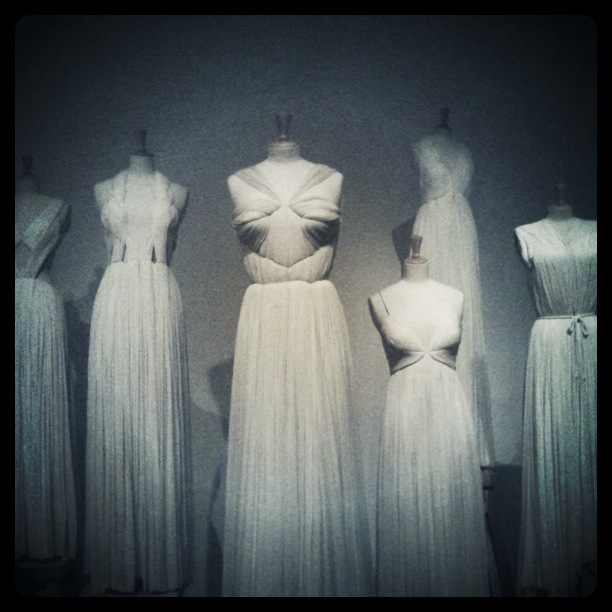
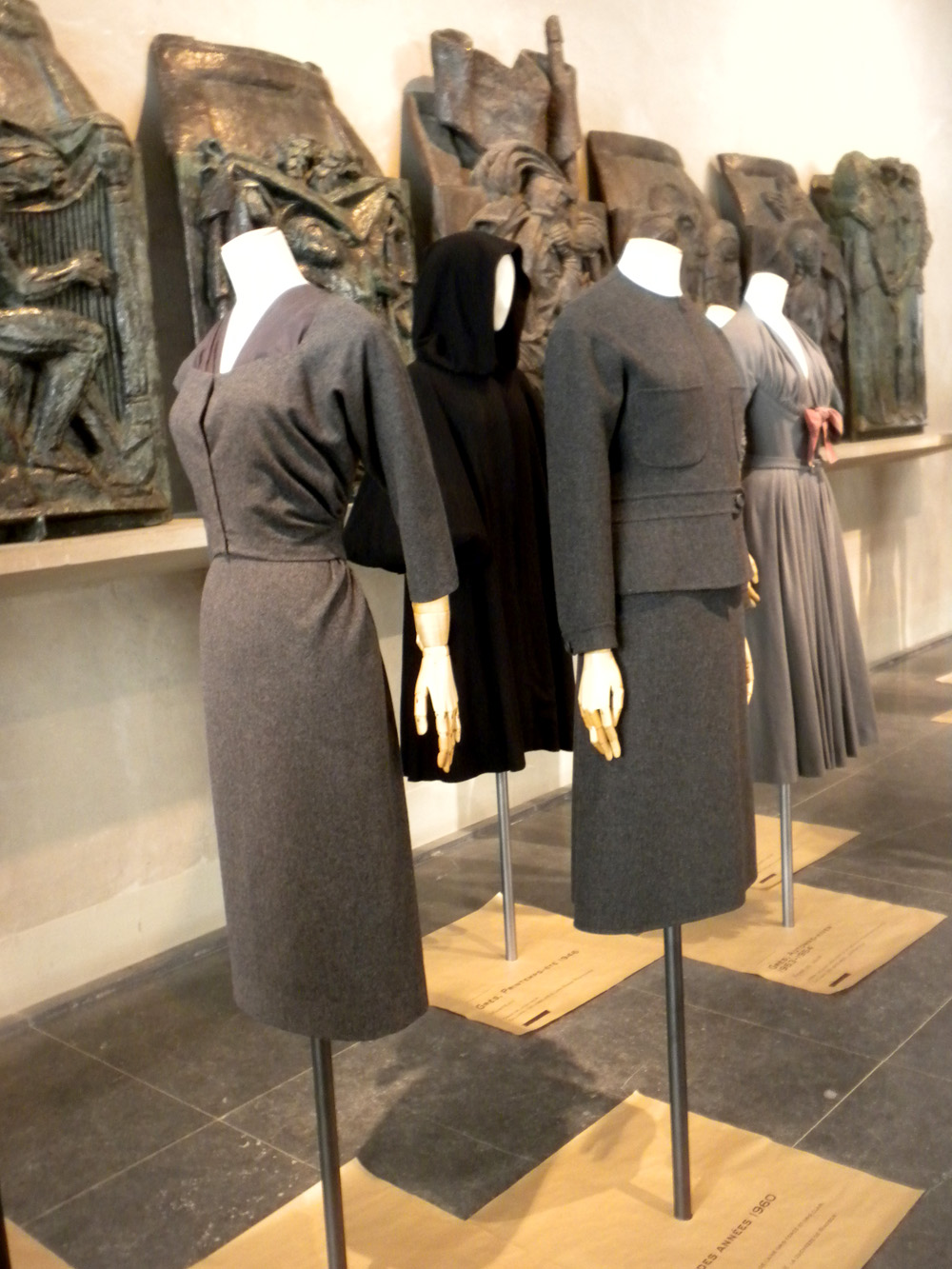
"Madame Grès, la couture à l'oeuvre,” at the Musée Bourdelle, photo by Laura McLaws Helms

by Laura McLaws Helms

While fashion is often viewed as a lesser art, used by museums to draw in a broader range of visitors, recent exhibitions in Paris have illustrated the vastly different ways costume can be looked at in regards to its place in society. Of them, the exhibition “Madame Grès, la couture à l'oeuvre,” at the Musée Bourdelle (till July 24th), covers the most traditional view of fashion history - a retrospective on a single couturier. Conversely, “L'Orient des femmes vu par Christian Lacroix” at the Musée du Quai Branly and “Les années 1990-2000” at the Musée de La Mode et du Textile in the Musée des Arts décoratifs are focused on aspects of dress history that are commonly overlooked, and when viewed together allow for a more varied understanding of costume.

The ongoing renovations of the Musée Galliera have left Paris without a museum expressly devoted to fashion, but provided its curators with the opportunity to stage a fashion exhibition amongst the sculpture of the Musée Bourdelle, the first time a multi-disciplinary show has been done there. The high quality work of Grès’ dresses, many of which can be closely analyzed, is a remnant from a past world - a fact which is further emphasized when compared with "Les années 1990-2000" organized by Musée de La Mode et du Textile (which closed May 8th). The second half of their ‘Histoire idéale de la mode contemporaine,’ the designers and looks chosen were the very apotheosis of Grès’ inimitable classicism.

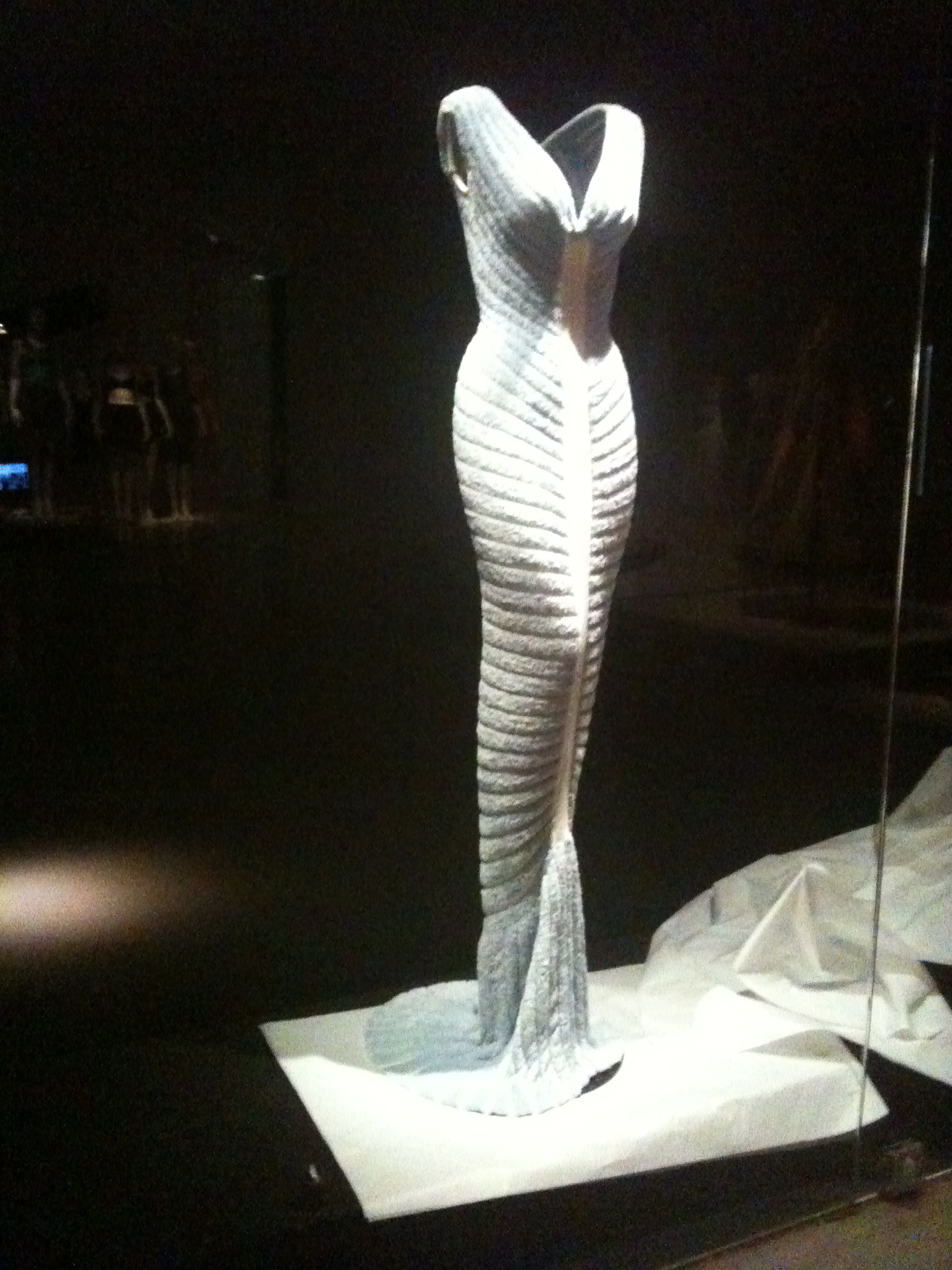
Azzedine Alaia exhibited in “Les années 1990-2000” at the Musée de La Mode et du Textile in the Musée des Arts décoratifs, photo by Laura McLaws Helms

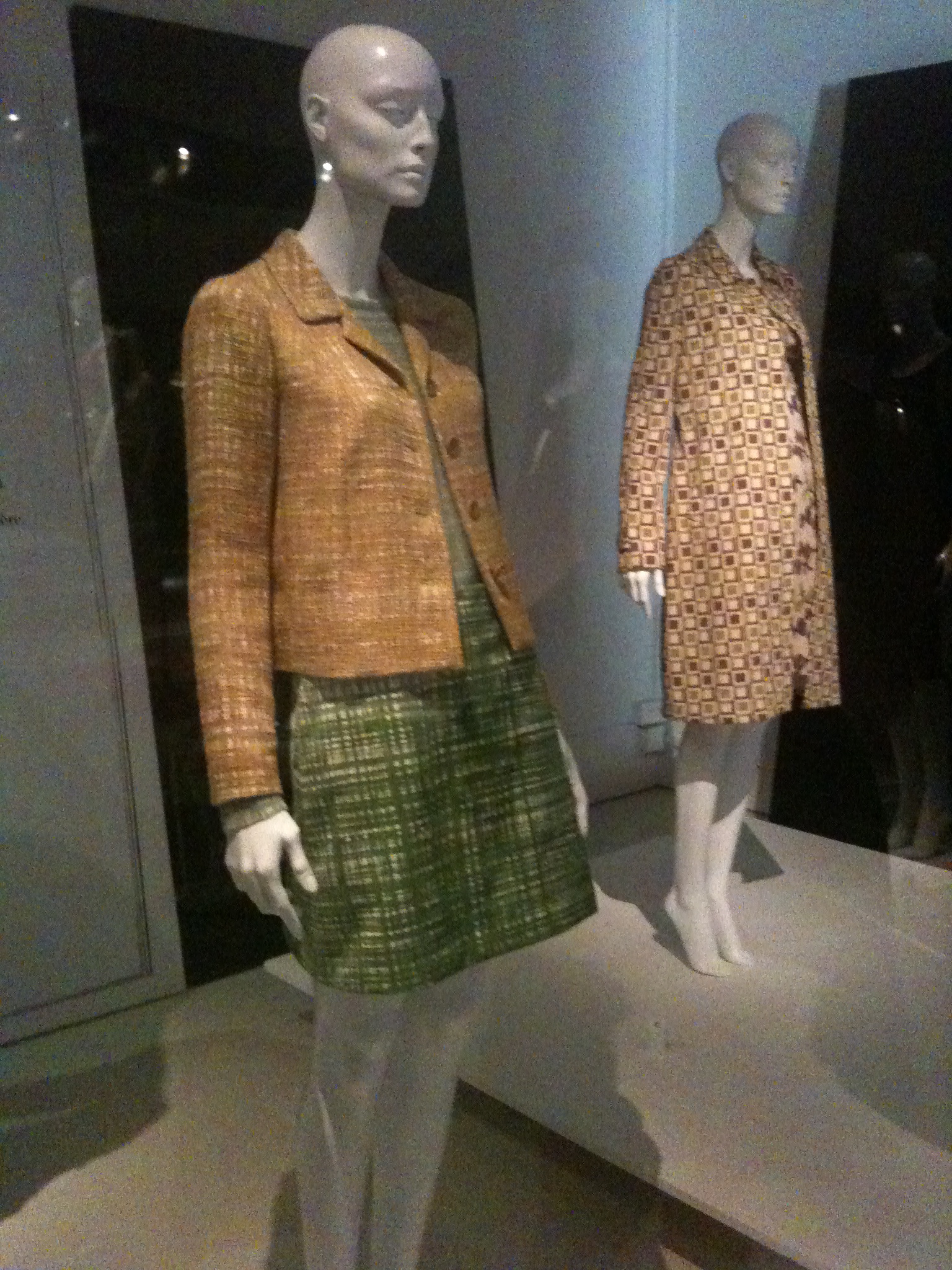
Opening with Margiela and the Belgians, the two floors of the exhibition were a rabbit warren of glass boxes filled with mostly prêt-a-porter outfits that bare little in common with the stately chic of Grès. The work of the thirty designers on view revealed the unquestionable influence of street style on contemporary fashion, with disparate ideas from grunge, punk and goth all making appearances. The diverseness of the looks on view (Lacroix’s gaudy couture vs. Miyake’s architectural pleated forms) made for an enjoyable exhibition, though one that at times seems too have been organized too soon — Lanvin RTW cocktail dresses two years out of the stores appear more ridiculous than prescient in the context of a museum. It is always difficult to truly analyze trends as they occur from a historical point of view, and the constructed tableaux often drew directly from the runway videos, emphasizing the seemingly unbreakable bonds between the garments and their mediated visions.

Prada exhibited in “Les années 1990-2000” at the Musée de La Mode et du Textile in the Musée des Arts décoratifs, photo by Laura McLaws Helms

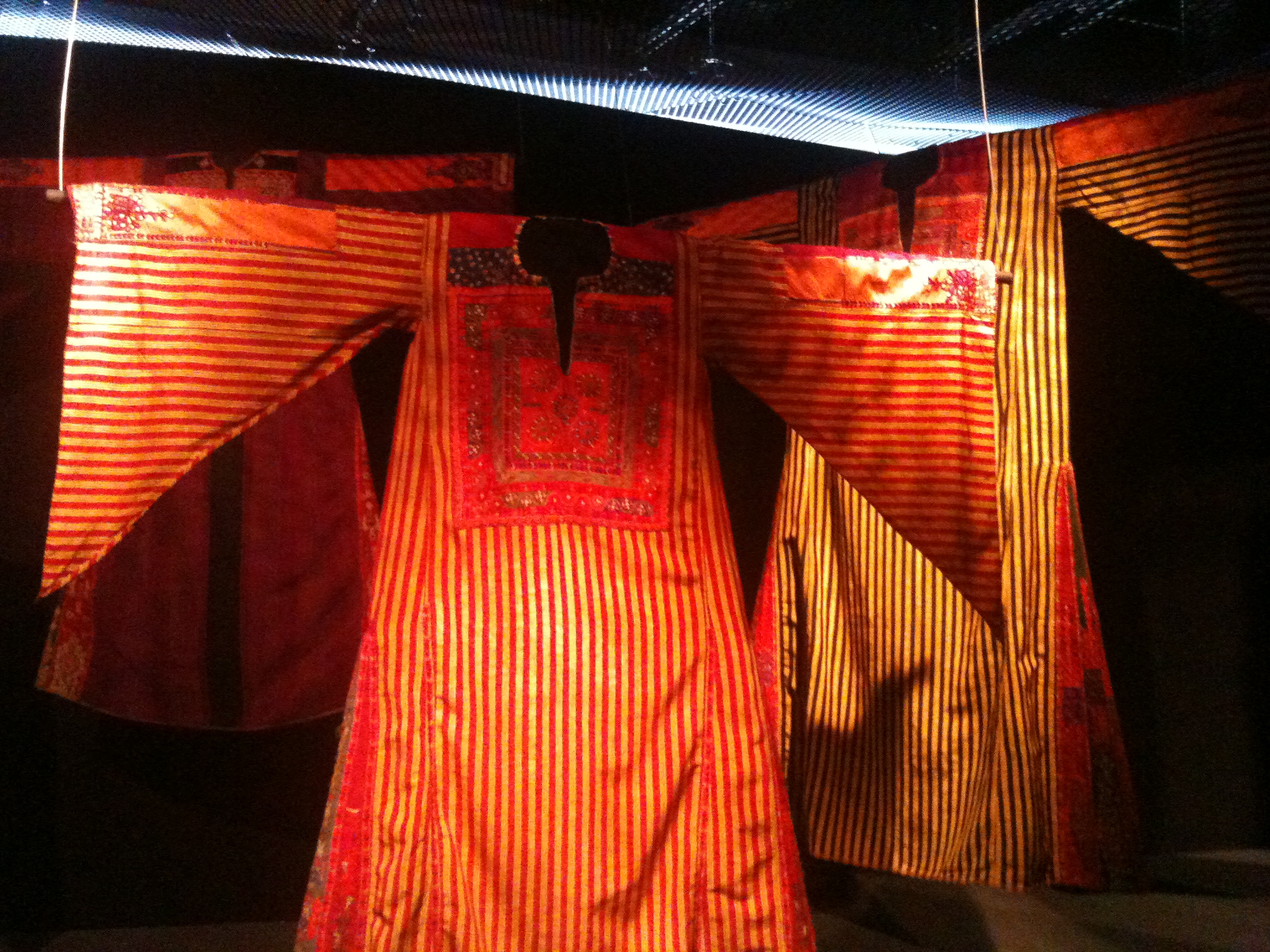
In sharp contrast to the Parisian high fashion focus on those exhibitions (all of the designers at MAD primarily show there), “Women of the Orient” (February 8- May 15) was a woven and embroidered journey through the Middle East. Beginning with a map, this factual analysis of the traditional garments of Syria, Jordan, Palestine and the Sinai desert was concerned with form and the craftsmanship. Though curated by Hana Al Banna-Chidiac, an eminent scholar of Middle Eastern textiles, this exhibition was the idea of Christian Lacroix, who following the closure of his couture house has found himself able to indulge his other passions, including a fascination with ‘Oriental’ dress dating to childhood. The heavily embroidered garments, layered and topped with jangling beads and coins impacted his design work, and Lacroix saw these women as “both witnesses and actresses in a contemporary history, which they lived through with their rebellious elegance, their cuts, their shapes, their traditions, their motives, their embroidery.” Viewed as a celebration of disappearing art forms and cultures, this exhibition was peerless in drawing together truly exceptional examples of native cultural dress. At a time when France has banned the wearing of the burqa in public, a display case of intricately embellished versions is of cultural import. The problems with this show rest more on a lack of editing and a failure in the design — apparently faced with choosing between many fine pieces they went with all of them, placing one behind another on sloping platforms meant to represent the jagged topography of the region. Hung flat to draw attention to the lack of tailoring, it was often difficult to see the dimly lit robes in back.

"L'Orient des femmes vu par Christian Lacroix” at the Musée du Quai Branly, photo by Laura McLaws Helms

While the garments in these exhibitions are examples of three different types of manufacture — haute couture, high end ready-to-wear and traditional handcrafts — they can be seen as symbolic of the constantly ebbing flows of fashion in France and the rest of the world. The handwork that is a requirement of haute couture and of traditional ethnic clothes has increasingly become unnecessary, replaced by many of the same manufacturing processes found in prêt-a-porter, yet the continued interest in these types of work, through exhibitions such as these, aids in their continuing relevance and influence.

Unravelling Knitwear in Fashion

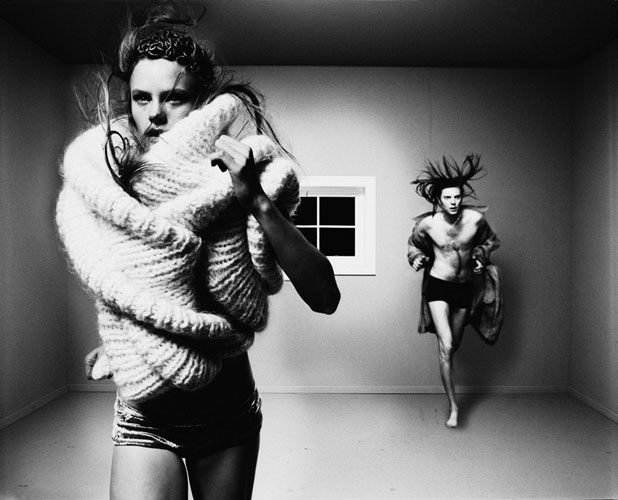
Sandra Backlund, Collection ‘Body, skin and hair’ (c) Photography: Johan Renck, Stylist Ellen Af Geijerstam

by Sarah Scaturro

I first met Karen Van Godtsenhoven when I was in Brussels last fall giving a lecture as the keynote speaker at the Camouflage Takes Center Stage conference at the Royal Military Museum.  She gave a wonderful presentation on camouflage in Belgian fashion - it was quite hilarious to watch all of the stiff military personnel (mostly men) chuckle uncomfortably as she showed a video of Bernard Willhelm's Spring/Summer 2004 presentation parodying the US military's "Don't Ask, Don't Tell" policy in which partially-clothed men walked out of a closet (literally) wearing camouflage and face paint and then proceeded to irreverently jump on a couch (see the video at the bottom of this post).

Van Godtsenhoven is a relatively new fashion curator with a promising future - "Unravel," the exhibition on view now at Momu, is the first time she has taken the helm as lead curator (along with the guest curator Emmanuelle Dirix, a lecturer at Central Saint Martins and Antwerp Fashion Academy.)  Following is an interview in which she talks about why she chose to dissect knitwear in fashion, what some of the challenges were in mounting an exhibition on this topic, and who she thinks some of the best knitwear designers are today. Her upcoming projects include exhibitions about Nudie Cohn and Walter Van Beirendock.

Fashion Projects: What inspired you to curate a show about knitwear in fashion?

Van Godtsenhoven: It's been a favorite subject and fascination of ours here for years. It was literally a research file ‘in the cupboard’ waiting to come out. With the current vogue for knitwear with young designers, but also the popularity of knitting within the wider public (think knitting cafés, ravelry.com, guerrilla knitting), we thought it was the right time for the subject to come out of the closet.
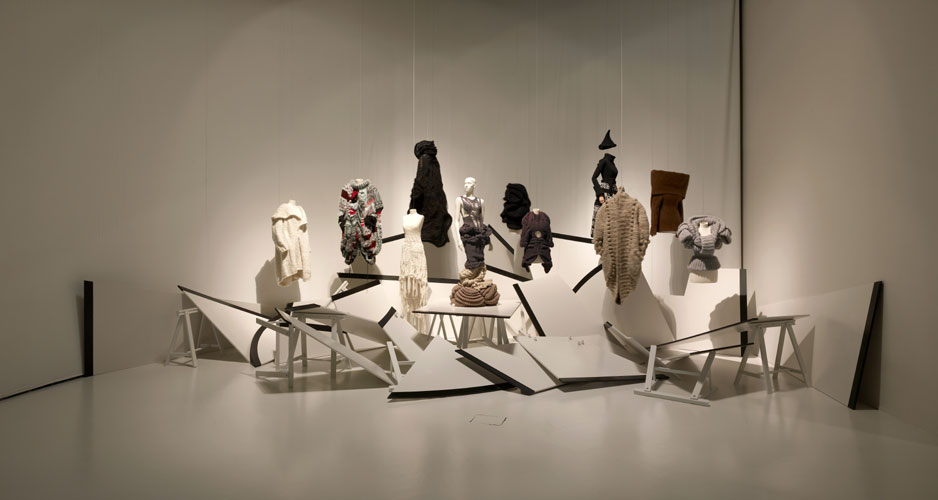
Unravel Installation,  MoMu, Antwerp, Photo: Frederik Vercruysse

You selected a mix of historical and contemporary pieces - besides the actual structure of the garments (non-woven, single element) did you find any surprising similarities or differences in how knitwear was used in the past as compared with today?

Yes, the changing status of knitwear in fashion is a subject of endless study possibilities. Whereas we see knitwear emerging very early on as a kind of handmade utility garment (related with warmth, hygiene and sturdiness - this element is still with us today), machine knitting is also a very old technique (16th century, long before the industrial revolution), which was very technologically advanced and resulted in very fine gauze- like materials. There are a few dresses and jackets in the show from the 17th, 18th and 19th century, of which many visitors cannot believe that they are knitted, the same goes for many of the 19th century socks: they are embellished and knitted so finely it looks like embroidery or lace. So, before the industrial revolution, machine knitting was considered high-class. Now we see an opposite appreciation: handmade goods are more costly than machine made ones.

There are many continuing ideas about knitwear (jersey is still used for sportswear, handmade goods are still associated with the domestic sphere and now also the DIY movement), but the short history of knitwear in fashion shows that there have been many (r)evolutions: from underwear and swimwear to Chanel’s jersey dresses and marine sweaters, to Schiaparelli and Patou’s abstract motifs, to the knitted A line dresses in the sixties, as a result of the sexual revolution, and the deconstructed 1990s knitwear that had its origins in the 1970s punk movement. Knitwear has always gone with the waves of society, and that makes it very interesting. I think the so called ‘revival’ (whilst knitwear has never really been away from the catwalk) of knitwear these days can be linked to heightened ecological awareness and a longing for handmade and body-hugging goods, and I'm curious in which form it will come back in the future.
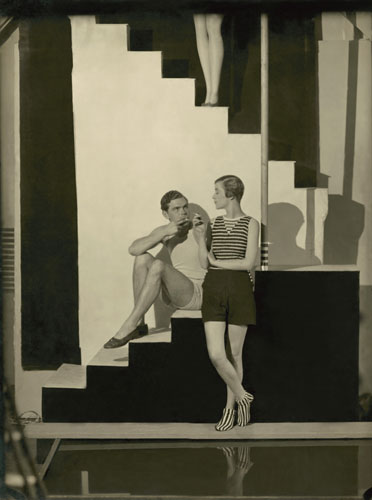
Bathing suit by Elsa Schiaparelli, ca. 1928 (c) Condé Nast Archive/CORBIS

Were there any challenges to exhibiting knitwear pieces, especially due to conservation issues?

Yes, both the heavy and voluminous pieces, as well as the fine gauze-like knits weigh themselves down under their own weight: knitwear is a more ‘open’ material than a woven cloth and will hence open up even more when hanging. This is a risk for skirts and dresses stretching, or growing longer up to 40 cm in the 5 months they are on show.

We covered the busts and mannequins with a fine jersey, which ‘clings’ well to the knitted silhouettes and keeps the pieces in place - we also provided waist and hip supports for the dresses. The very frail pieces are displayed flat in cases. Knitwear is really always best kept flat...I've learned this from my own experience!
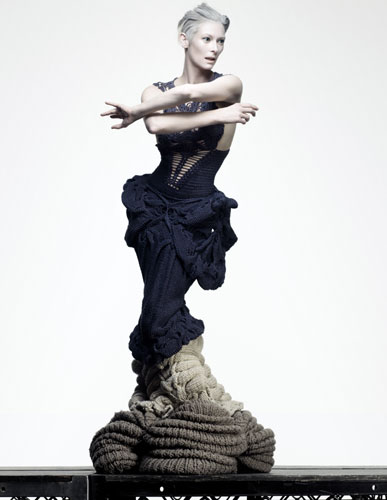
Tilda Swinton for Sandra Backlund. Published in Another Magazine, Autumn 2009 (c) Photography by Craig McDean, Styling by Panos Yiapanis

What are your favorite objects in the exhibition? Were there any objects you wanted but couldn't obtain?

I have to say that my favorites change often, but amongst the returning are: the four sweaters by Elsa Schiaparelli, the 3D silhouette by Sandra Backlund (made out of four different experimental dresses), and the knitted metal sweater by Ann Demeulemeester - it may sound like a punk outfit but it’s actually more like a very delicate jewel when you see it.

Oh, and maybe also the knitted boliersuit and miniskirt by Courrèges!

We were very sorry not to be able to get the sweater with holes (1982) by Comme des Garçons as it went missing, since it’s such a seminal piece for knitwear in high fashion - it completely changed our view on the formless in fashion, and regarding knitwear, to the ‘un-knitted’. In the title group ‘Unravel’ you see the evolution of how ‘waste’ (punk sweaters with holes, knitted in glaring colors) became fashion (Comme des Garçons, and many Belgian designers like Martin Margiela and Ann Demeulemeester, Raf Simons) and is now hugely popular (Mark fast, Rodarte).

You included new avant-guarde designers like Sandra Backlund and Mark Fast.  Who are some other emerging knitwear designers that we should keep an eye out for?

Good question, there are so many! I like Sandra Backlund and Mark Fast because of the very personal and highly different ways they treat knitwear. I also think Craig Lawrence, Kevin Kramp (menswear), Christian Wijnants (Belgian) and Iben Höj (from Denmark) all have very interesting, personal styles. Some come up with highly structured, sculptural pieces in raw wool, others treat the knitting process as something as delicate as lace making, others experiment with materials unheard of (fur, metal, rope), it is very exciting to watch these new talents.
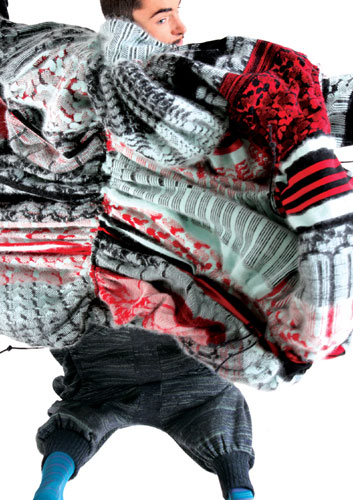
Kevin Kramp A/W 2009-2010 (c) 2009 ACM Photography + Kevin Kramp

What do you think of the emergence of subversive knitting and yarn-bombing?

I really like it and think it is a very positive kind of urban ‘graffiti’ and shared engagement with the urban environment. We also had a small guerrilla action here around the museum as well with knitters from Brussels who ‘protest’ against ugly buildings or city furniture by covering them in knitted plastic wraps (waste instead of a more noble material like wool). We got a lot of response to the call and it was really great to see the more routined artists from Brussels working together with the Antwerp volunteers. The police came by and said they thought it was ugly, but that was ok for the knitters, as they were actually showing the ugliness of some city sights by covering them in knitwear. It was not a very subversive or artistic act but a very fun process; what struck me is that knitting is really a social activity these days, more so than sewing, pattern cutting or other fashionable hobbies, it is something that can be done whilst talking and seeing your friends.

******* Bernard Willhelm's Spring/Summer 2004 Presentation (courtesy of Karen Van Godtsenhoven)

Bernard Willhelm SS 2004 from Sarah Scaturro on Vimeo.

Madame Grés, Couture at Work

by Ingrid Mida Madame Grés, First Gallery.

Madame Grés once said: “I wanted to be a sculptor. For me, working with fabric or stone is the same thing.” Silk jersey was her medium and she dressed such women as the Duchess of Windsor, Jacqueline Kennedy Onassis, Nan Kemper, Marlene Dietrich, and Grace Kelly like “statues in the flesh”.

“Madame Grés, Couture at Work”, is a retrospective exhibition that opened in March in Paris. Presented by the Musèe de la Mode de la Ville de Paris (which is otherwise closed for renovations until 2012), the location could not be more perfect. Setting Madame Grés’ fabric sculpture creations amidst the bronze and stone sculptures of the Musèe Bourdelle highlights the purity of line and form that defines the clothing created by this master of couture.

First Gallery

The first gallery is a monumental hall filled with massive sculptures. If not for the photographs from the exhibition poster at the far end of the hall, I would not have known I was in the right place. It took a few moments for my eyes to come to rest on the glass cabinet in the centre of the room. From a distance what looks like it might be a sculpture cut from fine white marble is actually a 1945 Madame Grés evening gown crafted out of silk jersey. Adjacent to it is a photograph by Willy Maywald and a toile of a half-completed Madame Grés dress with the shaping still defined by pins. This first gallery makes it clear that this is not a run-of-the mill retrospective. The juxtaposition of the sculptures and the classical forms of Madame Grés’ work adds contrast, beauty and vibrancy to both art forms. The presentation also references the famous photographs of Madame Grés work that included sculptures or Greek temples in the background.

Madame Grés, Suits.

Touring the exhibition was a journey of discovery, especially with the minimal signage (in French only) and the irregular shape of the museum. It was not always obvious to me where to go next, but it mattered little. There was a heightened sense of anticipation of what might be around the corner or in another room. This element of wonder was particularly notable in the Bourdelle studio and apartment, where the sculptor’s tools, furniture and artworks seem to delineate the shaping of the liquid lines of Madame Grés’ creations.

The exhibition includes about eighty designs by Madame Grés from the Musèe Galleria and private collections, fifty original photographs by artists such as Richard Avedon and Guy Bourdin, and one hundred drawings from the Madame Grés archive donated to the museum for this exhibition by Fondation Pierre Berge-Yves Saint Laurent.

What is on display can only be described as exquisite. In many cases, the garments are elevated on wooden plinths that lift the garments to above eye level just as if they were sculptures. This also allows for closer inspection of the mastery of line, shape, form and construction that Madame Grés brought to her work. Each period of Madame Grés career was represented, including her earliest works under the label of Alix. Many of the pieces seemed to be timeless and even modern in their sensibility and it often took a careful look at the labels to correctly discern the date since the designer often revisited certain favorite looks.

Madame Grés, Later Work.

My only criticism of the exhibition is the unilingual presentation. All the labeling is in French; the exhibition guide is only available in French; and the audio guide, which is available in English, is only for the Musèe Bourdelle sculpture works and includes no information on Madame Grés. Perhaps the museum did not anticipate many non-French speaking visitors to this out-of-the-way gallery, but it would have been wonderful if they had. This is a retrospective worth visiting, especially as the influence of Madame Grés can still be seen today in the work of such designers as Azzadine Alaia, Ralph Rucci and Isabel Toledo.

Madame Grés, Evening Gowns.

All photos by Ingrid Mida

Ingrid Mida is an artist and writer whose works explores the intersection between fashion and art. She is represented by Loop Gallery in Toronto.

Letting it All Hang Out: A Review of Charles Le Dray's Retrospective

“Charles”, 1995, fabric, thread, metal, plastic, paint. (48.3 x 35.6 x 11.4 cm).

By Lucie-Marie Layers

The work of the American sculptor and artist Charles LeDray was presented in a solo exhibition at the Whitney Museum these past winter months. The magnificent oeuvre of his most well-known craft – miniature clothing (and other media) made to a maximum effect – has been described by Whitney’s Curator of Drawings, Carter Foster, as “transporting pieces”, where LeDray offers an uncanny viewpoint of ordinary (mostly male) clothing and its implied wearers.

The context of much of his work pivoted around the idea of male identity, and of that particular branch of masculinity referred to as ‘machismo’. This was construed rather deliberately in LeDray’s piece from 1993 “World’s Greatest Dad”. This features a small-scale bomber jacket complete with a constellation of patches referring to quintessential macho clichés. Machismo is often translated into instances of "superior," exaggerated features such as physical power, personal virility and pride.You only need to conjure the character Stanley Kowalski in Tennessee William’s Pulitzer-prized play "A Streetcar Named Desire" to comprehend the concept of this certain male characteristic. The writings on the baseball cap of Le Dray’s piece designates the implied wearer as #1, the world’s greatest Dad (lover, alpha male, hero).

What is so interesting about the work of Charles LeDray is the way he speaks of a male stereotype in deliberate contrast to its ideal. In a rather poetic and gentle way, his miniature portraits (for his pieces are very much portraits of male identity) challenge these configurations by employing skills often associated with women - the delicacy of threading and sewing, and not least the miniature—so often associated with Victorian femininity.

Charles LeDray invites an exploration of the symbolic capital of clothing. The juxtaposition of macho ideals alongside the traditionally recognized female handicraft enables an unconventional understanding of society’s convention. This is seen again in “Army, Navy, Airforce, Marines” where LeDray’s ambitious portraits (un)intentionally diminishes man’s masquerade, presenting the ideal of masculinity as both complex and fragile.

" Army, Navy, Air Force, Marines," 1993, fabric, wire, vinyl, silkscreen, zipper.
With the exquisitely crafted “Charles” (1995) LeDray has constructed a miniature blue-collar uniform with clue as to the identity of the wearer: a name patch stitched to the chest. From this (self-)portrait hang several tinier items of clothing; colourful dresses, boxer shorts, pullovers, slacks, a brassiere, and bath robe. The complexity of this portrait can explain how costume is forever committed to concepts of identity, sexuality, community, and experience, all forming each individual, literally clinging on for their bare life.

Perhaps that explains why the real-life Charles LeDray is rather elusive. Born in Seattle in 1960, now living and working in New York City, he would rather let his work speak for itself than determine it. Preferring not to discuss his work, this exhibition surely was a way to let himself and his miniature male counterparts hang out more than ever.

The Charles LeDray exhibition was held at the Institute of Contemporary Art, Boston, before it traveling to the Whitney Museum of American Art in New York City.

"Overcoat'" 2004, fabric, wood, metal, paint, plastic, thread.

Lucie-Marie Cecilie Jespersdatter Layer is an artist and a graduate of the masters in Visual Culture: Costume Studies at NYU. She is currently based in New York City, her previous work experiences include Cheap Date (UK) and The Royal Danish Ballet.